

What to Do After Getting a Traffic Ticket: 7 Smart Steps Before You Pay

The moment a ticket lands in your hand, a clock starts. The decisions you make over the next few days — whether to pay, fight, or pursue dismissal — determine the total cost, the points on your license, and whether the violation ever reaches your insurance company.
Most drivers pay the fine immediately. That’s often the most expensive option. Here’s what to do instead.
Quick Summary
- Don’t pay the ticket immediately until you understand your options.
- Check the response deadline on the citation.
- See whether your state offers dismissal or traffic school.
- Compare the long-term insurance impact before deciding.
- Serious violations may justify speaking with a traffic attorney.
State laws vary. Procedures, eligibility, point systems, and dismissal programs differ by state. Always verify instructions with the court listed on your citation.
Step 1: Read the Ticket Carefully Before You Do Anything
Before you pay or call the court, read every line on the citation.
Look for:
- The violation code and description — what you’re actually charged with
- The court date or response deadline — when you must respond by
- The listed fine amount — the base fine before fees and assessments
- The officer’s notes — speed recorded, conditions, location
The deadline is the most important detail. Missing it typically results in a failure-to-appear charge on top of the original violation, a license suspension, or both. Find the deadline and write it somewhere you’ll see it.

Step 2: Don’t Pay the Fine Yet
Paying a traffic ticket is treated as a guilty plea in most states. Once you pay, the conviction goes on your driving record and your options narrow significantly. Before you pay, determine whether any of the following apply to your situation.
Step 3: Check Whether You’re Eligible for Ticket Dismissal
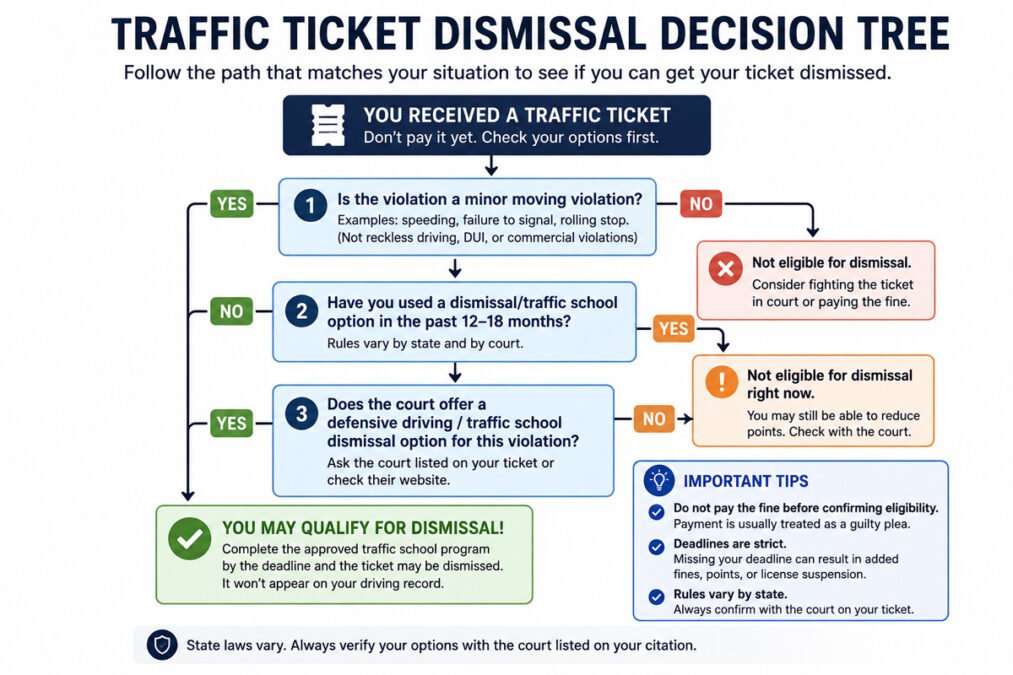
In some states, a first-time minor moving violation can be dismissed — meaning it never appears on your record — by completing a defensive driving or traffic school course. This is one of the highest-value options available if you qualify.
Typical eligibility requirements:
- The violation must be a minor moving violation (speeding, failure to signal, rolling stop — not reckless driving, DUI, or commercial vehicle violations)
- You must not have used the dismissal option recently (usually within the past 12–18 months)
- The court must offer the option for your type of violation
How to check: Contact the court listed on your ticket and ask whether you’re eligible to complete a defensive driving course for dismissal. In many states, this option is listed on the court’s website or on the back of the citation itself.
Important: Do not pay the fine before confirming dismissal eligibility. Payment closes this option in most jurisdictions.
See our guide on how to get a speeding ticket dismissed for state-specific rules.
Step 4: Consider Whether to Fight the Ticket
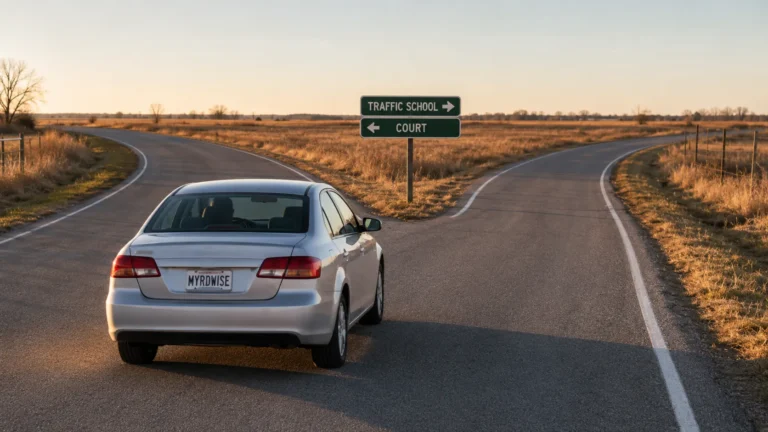
If dismissal isn’t available, fighting the ticket in court may be worth exploring. You have the right to contest any traffic citation.
When fighting makes sense:
- The violation is serious (reckless driving, DUI, excessive speeding) and the record impact is significant
- You have evidence the citation was incorrect — wrong speed recorded, wrong violation, officer error
- A lawyer’s fee is less than the combined cost of fines, surcharges, and insurance increase
When fighting usually isn’t worth it:
- Minor first violation with no prior record — the cost of court time and a lawyer often exceeds the insurance impact
- You have limited documentation of what actually happened
Options if you fight:
- Appear in court yourself (free, time-consuming)
- Hire a traffic attorney (costs $150–$500 typically, may result in reduction or dismissal)
- Request a continuance (more time to prepare or for the officer to not appear, which sometimes results in dismissal)

Step 5: If You’re Paying — Understand What You’re Actually Paying
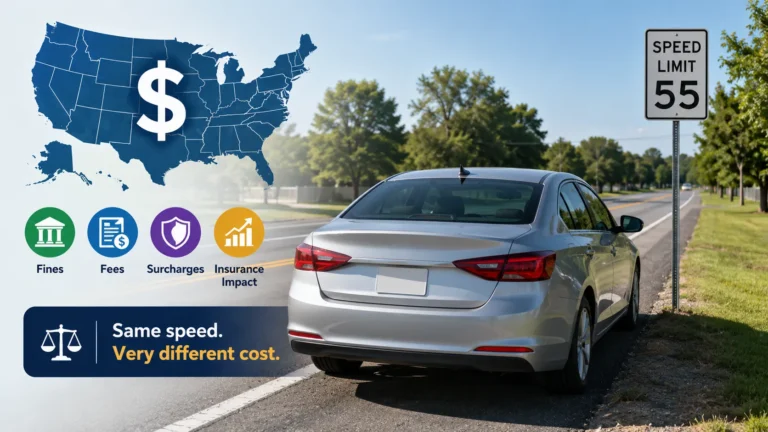
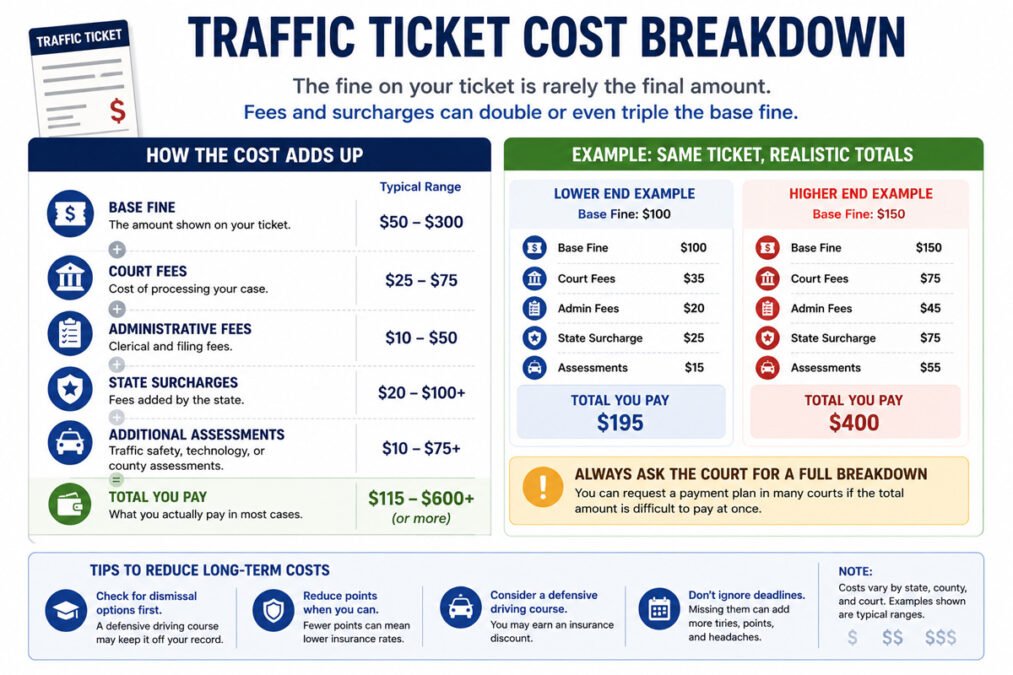
The fine on the ticket is rarely the final amount. States add surcharges, court fees, and administrative costs that often double or triple the base fine.
Before you pay, ask the court for a breakdown of all fees. In many jurisdictions, you can also request a payment plan if the total is difficult to pay at once — most courts accommodate this rather than pursue collection.
After you pay: the conviction goes on your record. Depending on your state and insurer’s renewal timing, this will eventually reach your insurance company. See our guide on how traffic violations affect insurance rates after a ticket for how long the impact lasts and what you can do about it.
Step 6: Address the Points
Even if you can’t get the ticket dismissed, you may be able to reduce the points it adds to your license. Many states allow point reduction through a defensive driving course — separate from the ticket itself.
Point reduction is different from ticket dismissal:
- Dismissal: the ticket doesn’t appear on your record at all
- Point reduction: the ticket appears, but fewer points are assessed
Some states allow both (dismiss the ticket through the course) while others only allow point reduction after the ticket has been paid. The rules vary significantly by state.
See how to avoid points on your license for state-specific options.
Step 7: Consider a Defensive Driving Course for the Insurance Discount
If the ticket is going to stay on your record and affect your insurance, completing a state-approved defensive driving course is often the fastest way to partially offset the rate increase. Most insurers offer a discount — typically applied to your premium — for course completion.
This discount is separate from any point reduction and can be used proactively — you don’t need a violation to qualify.
Check with your insurer before enrolling to confirm which courses they accept. Then submit your completion certificate at or before your next renewal.
Decision Tree: What to Do With Your Ticket
Got a ticket
│
├── Is it a minor moving violation?
│   ├── YES → Is dismissal available in your state?
│   │         ├── YES → Complete approved course → submit to court → ticket dismissed
│   │         └── NO  → Can you reduce points?
│   │                   ├── YES → Pay fine + complete course for point reduction
│   │                   └── NO  → Pay fine, consider shopping insurance at renewal
│   │
│   └── NO (serious violation) → Consult a traffic attorney before doing anything
│
└── Did the officer make an error?
    └── YES → Contest in court with documentation
Typical Timeline After Receiving a Ticket
Receive ticket
      ↓
Read the citation
      ↓
Check the response deadline
      ↓
Review dismissal or traffic school eligibility
      ↓
Fight the ticket or pay the fine
      ↓
Complete any required course
      ↓
Insurance renewal and record updates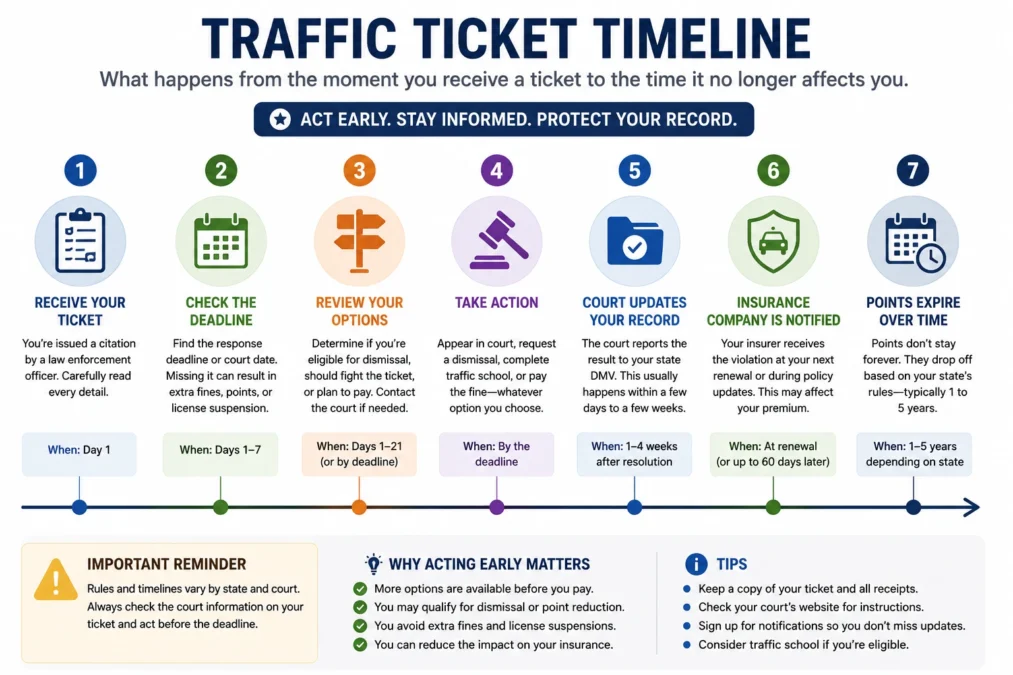
Common Mistakes Drivers Make
- Paying immediately without reviewing available options.
- Missing the response deadline.
- Assuming insurance will never see the violation.
- Ignoring point-reduction opportunities.
- Forgetting to compare the long-term cost instead of only the fine.
What Not to Do
Don’t ignore the ticket. An unanswered ticket becomes a failure to appear, which carries additional charges and often triggers a license suspension.
Don’t pay immediately without checking dismissal options. Payment is a guilty plea. It forecloses dismissal in most jurisdictions.
Don’t assume your insurance won’t find out. Insurers pull driving records at renewal. Violations that appear on your record within their lookback window will affect your rate.
Don’t ask someone else to handle a court appearance without proper authorization. In most jurisdictions, you must appear yourself or retain a licensed attorney.
Frequently Asked Questions
How long do I have to respond to a traffic ticket?
Typically 30 days from the date of the citation, but it varies by state and court. Check the deadline on your ticket and don’t miss it — failure to respond triggers additional penalties.
Will one ticket really affect my insurance?
A single minor violation with an otherwise clean record typically produces a moderate increase at your next renewal. The impact depends on your insurer, the violation type, and your prior record. See how traffic violations affect insurance rates after a ticket for specifics.
Can I get a ticket dismissed without going to court?
In most states that offer dismissal through a defensive driving course, you complete the course, submit the certificate to the court (often by mail or online), and the ticket is dismissed without a court appearance. Confirm the process with your specific court.
What if I was out of state when I got the ticket?
Most states share violation data through the Driver License Compact. An out-of-state ticket will typically appear on your home state record and affect your insurance at renewal. The dismissal and point-reduction options available are those of the state where the violation occurred — not your home state.
Should I hire a lawyer for a speeding ticket?
For a minor first violation, probably not — the cost often exceeds the benefit. For a more serious violation (reckless driving, excessive speeding, DUI), yes — the record impact is significant enough that professional representation is worth the cost.
Your First Move

The first thing to do after getting a ticket is stop — don’t pay it yet. Read the citation, find the deadline, and check whether dismissal is available in your state. That single step is worth more than anything else you can do.
From there, the right path depends on the violation type, your record, and your state’s rules. Minor violation, clean record, dismissal available? Take the course. Serious violation? Talk to an attorney before you do anything.