
Defensive Driving Tips: 10 Habits That Make Every Drive Safer
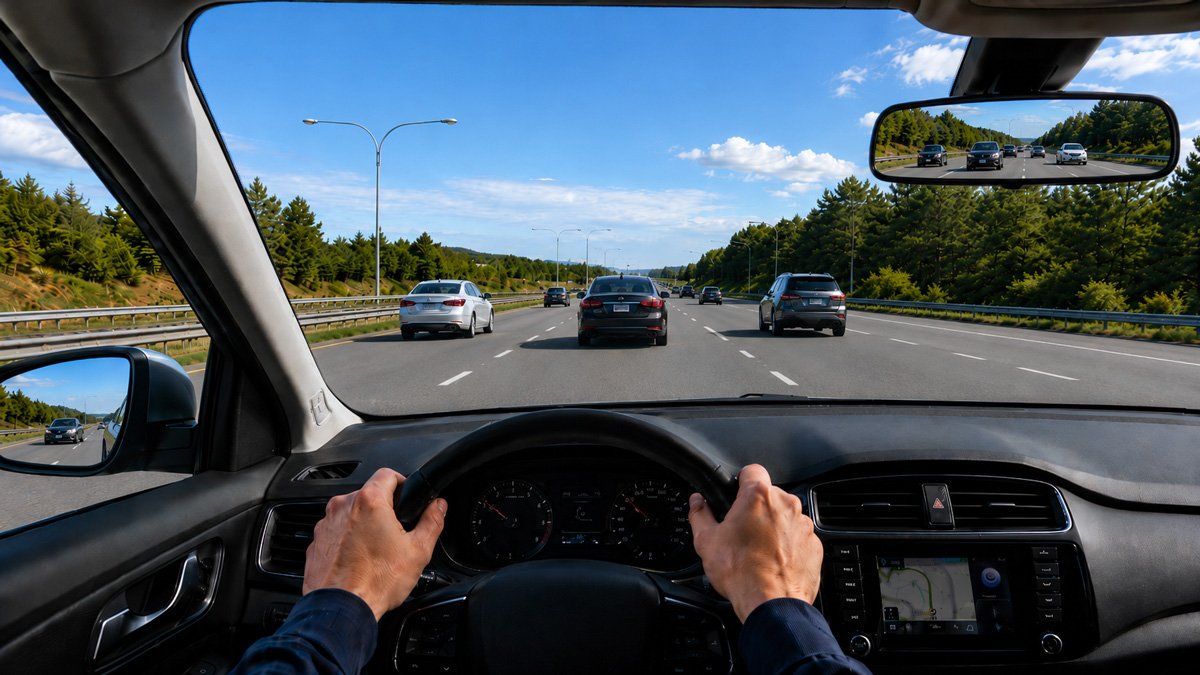
Most accidents don’t happen because someone doesn’t know the rules of the road. They happen because a driver wasn’t paying attention, followed too closely, drove too fast for the conditions, or didn’t see a hazard in time. Defensive driving closes those gaps.
These defensive driving tips aren’t theory — they’re specific habits that reduce your exposure to accidents, tickets, and the long-term costs that can follow. Apply a few of them consistently and you’ll notice a difference in how relaxed and in-control you feel behind the wheel.
What Is Defensive Driving?
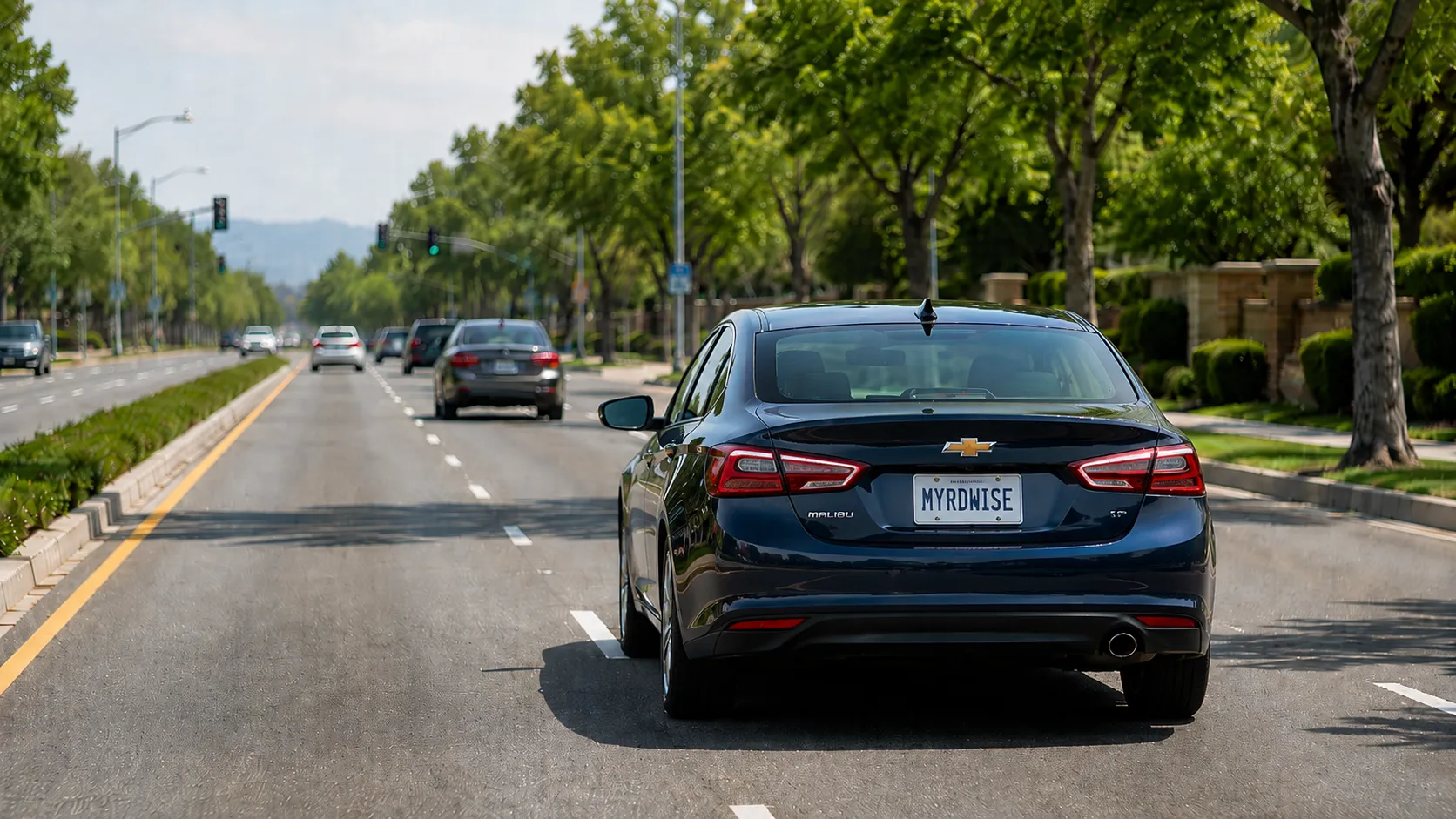
Defensive driving means driving in a way that gives you more time, space, and information before a hazard becomes an emergency. It is not just obeying traffic laws. It includes scanning ahead, keeping a safe following distance, checking mirrors, avoiding blind spots, adjusting speed for conditions, reducing distractions, and staying calm around aggressive drivers.
New York DMV describes defensive driving as being prepared, looking ahead, maintaining the correct speed, signaling, allowing space, avoiding handheld mobile devices, and keeping the vehicle in good condition. California DMV also emphasizes scanning ahead, avoiding blind spots, and using the three-second rule to maintain a safe following distance.
Use this quick defensive driving tips summary as a practical checklist before your next drive.
| Defensive driving habit | Why it matters |
|---|---|
| Keep a three-second following distance | Creates stopping time if traffic changes suddenly |
| Scan 10–15 seconds ahead | Helps you see brake lights, pedestrians, and merging traffic earlier |
| Check mirrors often | Keeps your awareness current before you need to react |
| Avoid blind spots | Reduces the chance of being missed during another driver’s lane change |
| Adjust speed for conditions | Matches your speed to the real road risk, not just the posted limit |
| Reduce distractions before moving | Keeps your attention available for hazards |
| Let aggressive drivers go | Lowers your exposure to unpredictable behavior |
1. Follow the Three-Second Rule — and Extend It When Conditions Are Bad
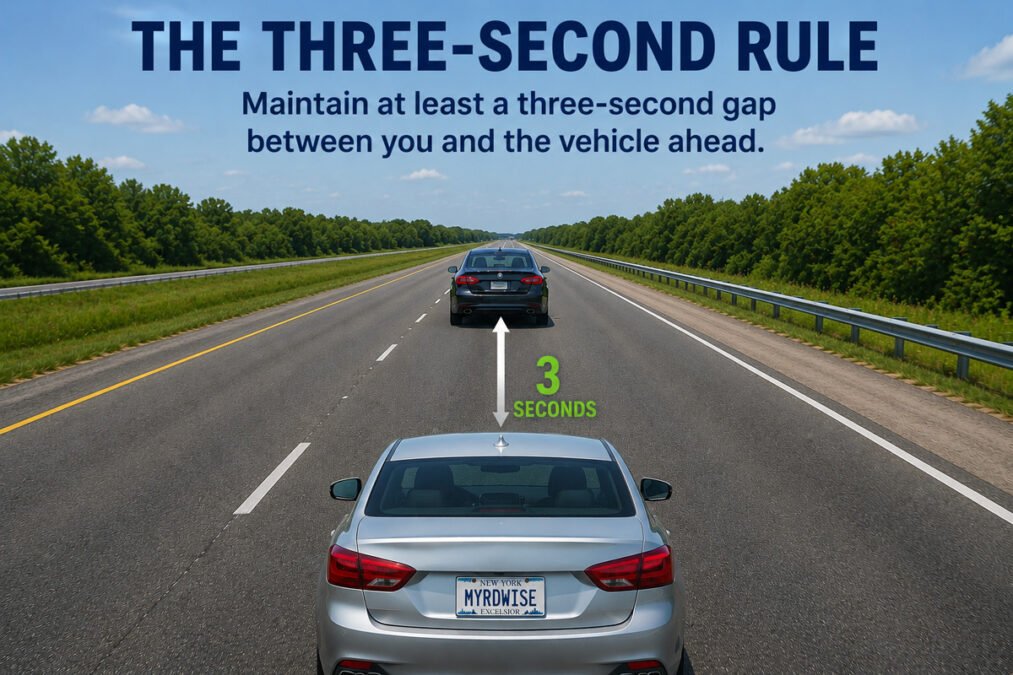
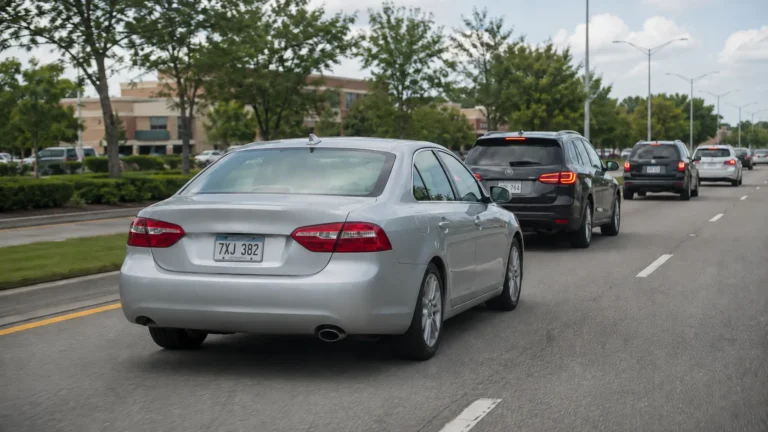
Pick a fixed object on the road ahead. When the vehicle in front of you passes it, count: one thousand one, one thousand two, one thousand three. If you reach that object before you finish counting, you’re too close.
Three seconds is the minimum under ideal conditions — dry road, good visibility, normal speeds. In rain, at night, or at highway speeds, extend it to four or five seconds. Behind a large truck, extend it further: trucks have longer stopping distances and block your view ahead.
The gap feels awkward at first. Other drivers will fill it. Let them. Your job is to protect the space in front of you, not to prevent anyone from merging. California DMV also advises taking your foot off the accelerator when another vehicle merges too closely in front of you so you can rebuild space.
2. Scan Ahead, Not Just at the Car in Front of You
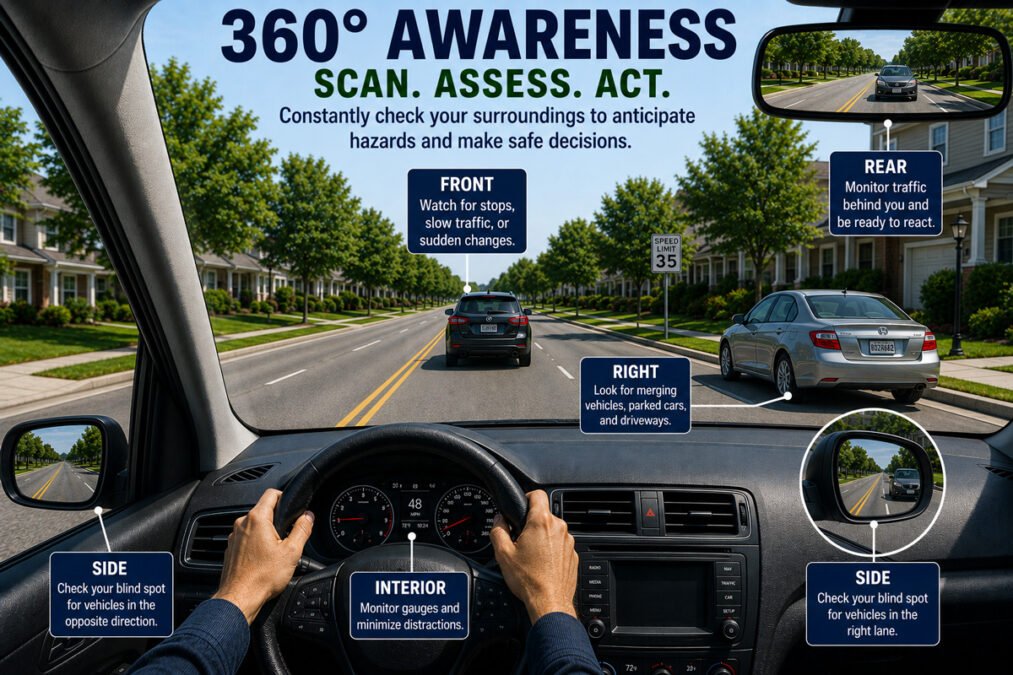
At 60 mph, you cover 88 feet every second. If you’re only watching the bumper in front of you, you have almost no reaction time when something changes three or four cars ahead.
Develop the habit of scanning 10–15 seconds ahead — roughly a city block in town, a quarter mile on the highway. You’re looking for brake lights, merging vehicles, pedestrians, and anything that suggests traffic is about to slow or shift. California DMV recommends scanning at least 10 seconds ahead so you have time to react and avoid last-minute moves.
At intersections, check cross traffic before you enter — even on a green light. A two-second pause and a left-right-left scan costs you almost nothing and catches the drivers who run late yellows.
3. Check Your Mirrors Every Five to Eight Seconds
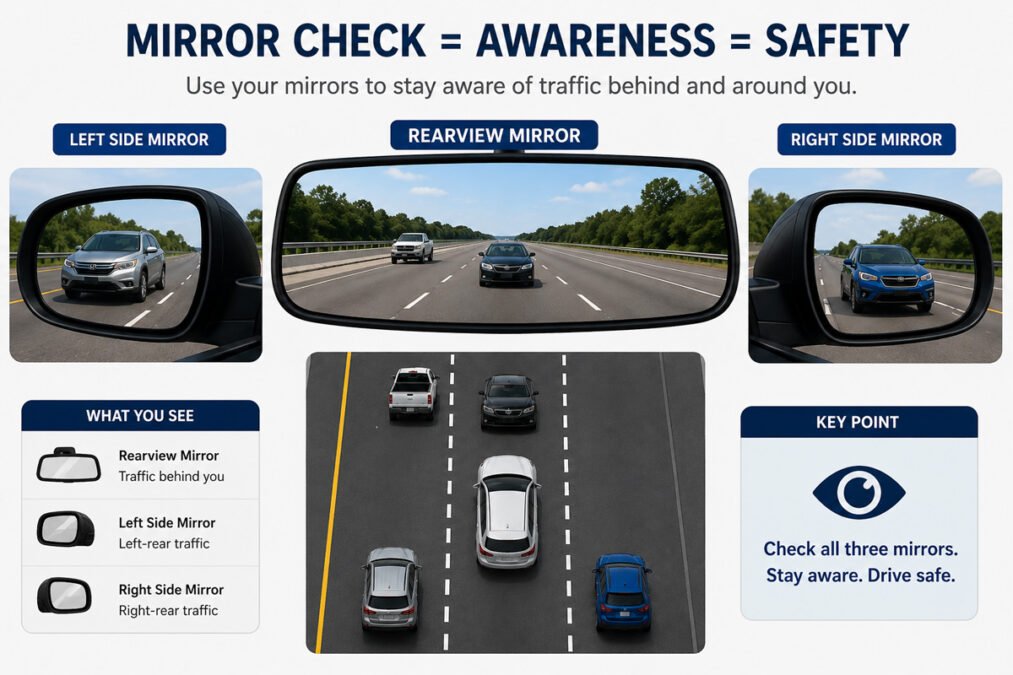
Your mirrors give you the picture behind you. That picture changes constantly, and if you’re only checking mirrors when you change lanes, you’re operating on outdated information.
Make a habit of cycling through your mirrors roughly every five to eight seconds: left side, rearview, right side. You’ll know when someone is riding your bumper, when a fast-moving vehicle is approaching, and when your lane change window is clear — before you need that information.
This habit is consistent with New York DMV’s advice to keep your eyes moving, notice what is happening at the sides of the road, and check behind you through your mirrors every few seconds.
4. Stay Out of Other Drivers’ Blind Spots
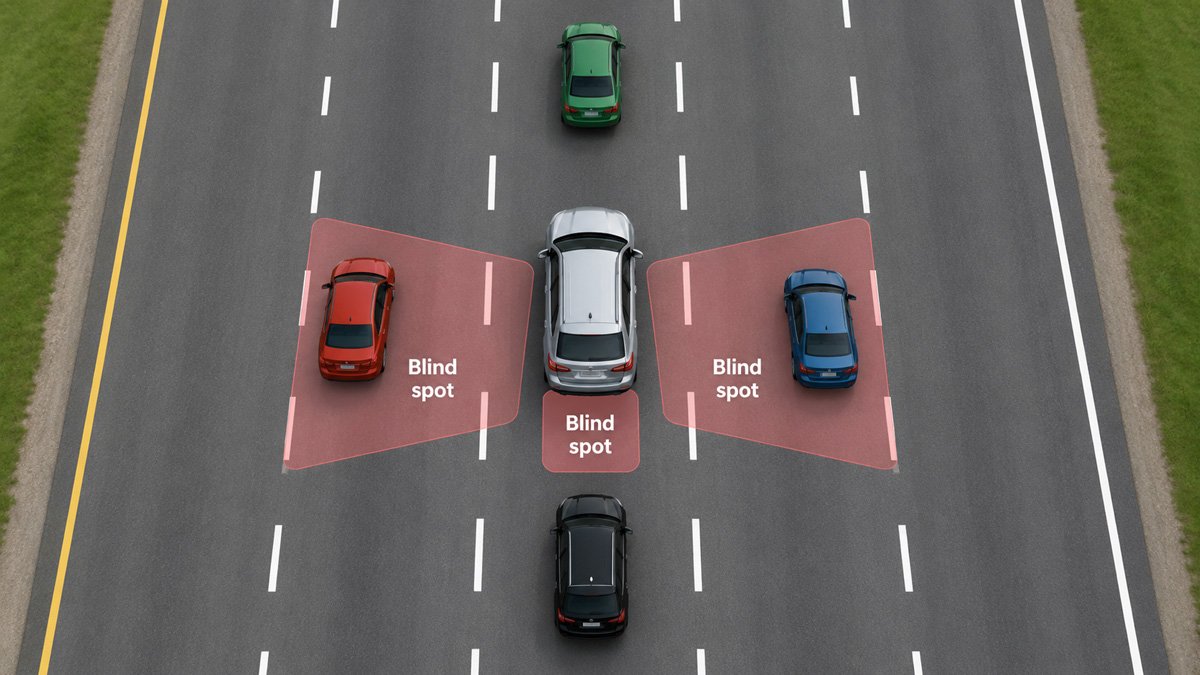
Every vehicle has blind spots — areas the driver can’t see in their mirrors and can’t easily see with a shoulder check. If you’re driving in another vehicle’s blind spot, you effectively don’t exist to that driver.
On multi-lane roads, either pass completely or fall back. Lingering alongside another vehicle eliminates your escape route if they drift or change lanes without checking. California DMV specifically advises drivers not to stay in another driver’s blind spot and to avoid driving directly alongside other vehicles.
5. Adjust Your Speed for Conditions, Not Just the Speed Limit
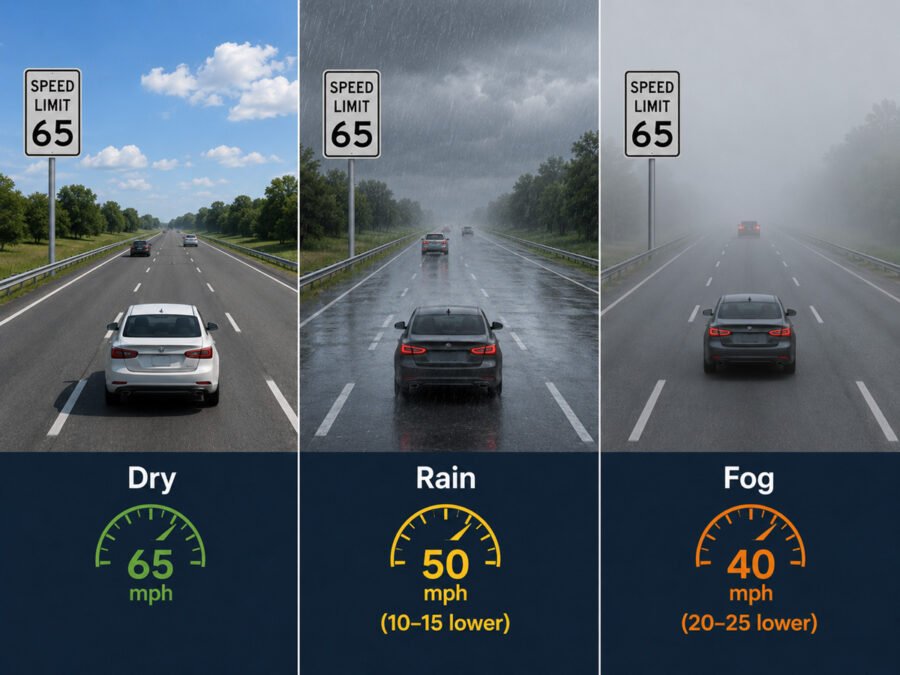
The posted speed limit assumes good conditions: dry pavement, clear visibility, normal traffic. When those conditions change, the safe speed changes too.
Rain reduces traction and can increase stopping distance, especially when tires are worn or the road surface is slick. Fog cuts your visibility and gives you less time to react. Heavy traffic means less space to recover from another driver’s mistake. None of these are reflected in the speed limit sign.
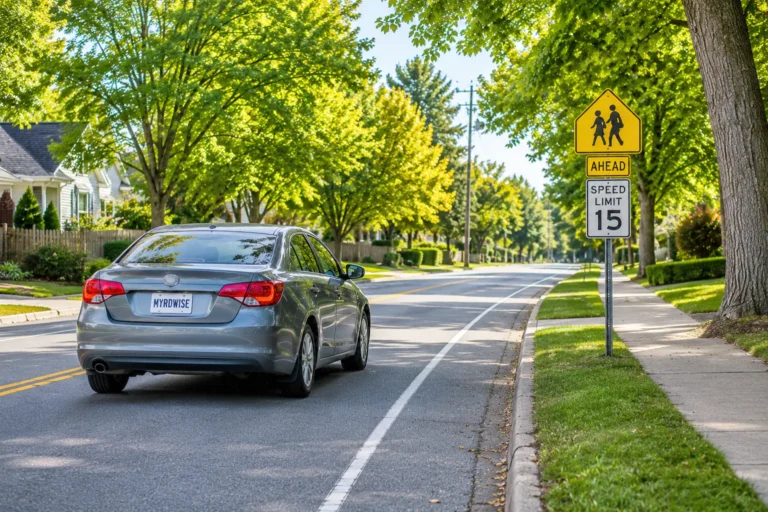
Defensive drivers treat the posted limit as a ceiling, not a floor. If conditions call for 10–15 mph below the limit, that’s the right speed. NHTSA advises driving slowly in rain because slick roads make it harder to control or stop your vehicle, and New York DMV notes that the safe speed on a slippery or foggy road may be much lower than the posted limit.
For practical guidance on reducing speed, increasing following distance, handling hydroplaning, and avoiding standing water, see how to drive safely in the rain.
For techniques that address changing limits, downhill speed creep, and pressure from faster traffic, see how to avoid speeding tickets.
6. Use Your Turn Signal Early — Not as You’re Already Moving
A turn signal that goes on as you’re starting to change lanes isn’t communication — it’s narration. The point of signaling is to give other drivers time to adjust.
Signal at least three seconds before a lane change in traffic, and longer on the highway. Before exiting a highway, signal before you brake, not after. This gives vehicles behind you the full picture of what you’re doing.
7. Give Yourself an Out at Every Intersection
Intersections are where many serious crashes happen. Before you enter one — even on a green — check for a clear path through.
Practical habit: before your light turns green, watch the cross traffic clear. On your green, glance both ways before you accelerate. This adds about two seconds to your trip through the intersection and is one of the highest-value defensive habits you can build.
If you’re crossing a multi-lane intersection, be especially aware of the second lane — a driver in the near lane may have stopped for you, but the driver in the far lane may not have seen you.
8. Reduce Distractions Before You Start Moving
Most drivers know texting while driving is dangerous. Fewer account for the full range of things that pull attention off the road: adjusting music, eating, entering a destination into GPS, reaching into the back seat, long conversations that require emotional engagement.
The practical version of this isn’t “don’t ever touch your phone.” It’s: handle everything before you pull out. Set your route, adjust your playlist, and finish your coffee before you’re in traffic. If something comes up while you’re driving, pull over or wait until you’re stopped at a light.
A hands-free call is safer than a handheld one, but it still reduces your hazard-detection ability. Save demanding conversations for when you’ve parked.
9. Have a Plan for What Happens If Something Goes Wrong
Defensive drivers don’t just respond to hazards — they think through scenarios before they happen.
A few to work through mentally:
- If the car ahead brakes hard: where is my stopping space? Do I have room, or am I too close?
- If I need to swerve: is the shoulder clear? Is there a lane I can move into?
- If someone runs a red light: am I in a position where I’d see them in time?
This isn’t anxiety — it’s the same mental simulation that experienced drivers do automatically. Over time it becomes reflexive.
10. Let Aggressive Drivers Go
Aggressive drivers — tailgaters, lane-weavers, horn-leaners — are a hazard. The instinct to respond is understandable. Don’t.
If someone is riding your bumper, change lanes when it’s safe and let them pass. If someone cuts you off, create space and move on. Engaging with an aggressive driver extends your exposure to them and removes the calm, methodical thinking that makes defensive driving work.
New York DMV advises drivers confronted by aggressive drivers to remain calm, move away safely, avoid challenging the other driver, and not return gestures or shouts. Your goal on the road is to get where you’re going safely, not to correct other people’s behavior.
How These Habits Add Up
None of these tips is dramatic in isolation. The value is in applying them consistently across every drive — not just when you’re in heavy traffic or bad weather, but when everything seems fine too. Many crashes happen in normal conditions to drivers who were momentarily off their game.
The best defensive driving tips are simple, but they only work when they become habits. Defensive driving is the practice of staying on your game regardless of conditions.
If you want to formalize these habits and potentially lower your insurance rate in the process, a state-approved defensive driving course covers many of these topics — plus gives you a completion certificate you can submit to your insurer if your insurer accepts the course for a discount. See how defensive driving works for a breakdown of what the courses cover and what you get for completing one.
Frequently Asked Questions
What’s the most important defensive driving habit?
Maintaining a safe following distance has the broadest impact across the most situations. It’s the habit that creates time and space for everything else: braking, scanning, lane changes, and avoiding aggressive drivers.
Can defensive driving tips actually lower my insurance?
The tips themselves do not automatically lower your insurance. However, completing a state-approved defensive driving or crash-prevention course may qualify you for a discount with some insurers, depending on your state, insurer, age, and driving record.
How long does it take to build defensive driving habits?
Most drivers notice a real shift within two to three weeks of consciously applying two or three of these habits. Start with following distance and mirror checks — they have the fastest feedback loop.
Are defensive driving tips different for new drivers vs. experienced drivers?
The techniques are mostly the same. New drivers need repetition and clear routines. Experienced drivers often need to correct overconfidence, complacency at familiar intersections, and habits that became automatic but not necessarily safe.
Do defensive driving tips help new drivers?
Yes. New drivers often focus on operating the vehicle, but defensive driving teaches them to manage space, scan ahead, and predict what other road users might do. Those habits make practice time more useful and help reduce panic reactions.
Sources
California DMV: Section 8 — Safe Driving