
10 Bad Driving Habits to Fix Before They Cause a Ticket or Crash
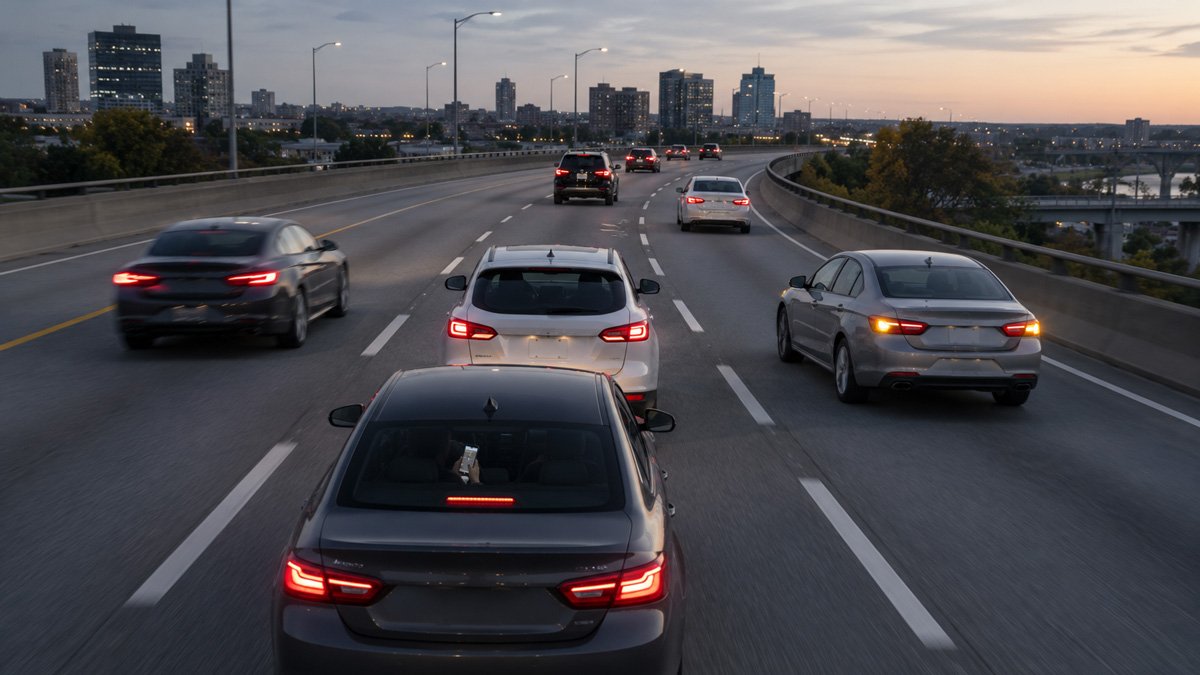
Bad driving habits are usually not dramatic. They are the small, automatic things drivers repeat so often they stop noticing them — rolling through a stop sign, drifting within a lane, following too closely, or treating a yellow light as permission to speed up.
That is what makes them dangerous. A habit can feel harmless for months or years, right up until it causes a ticket, a near-miss, or a crash.
The good news is that most common driving mistakes do not require advanced skill to fix. They require noticing the habit, understanding the risk, and replacing it with a safer routine.
Quick Answer: What Are the Most Common Bad Driving Habits?
The most common bad driving habits include following too closely, failing to check blind spots, rolling through stop signs, driving distracted, signaling late, speeding in school or work zones, merging poorly, overdriving your headlights at night, and accelerating through yellow lights.
The safest way to improve is to fix one habit at a time. Start with the habit that creates the highest risk on your daily routes — usually following distance, distraction, or speed control.
Common Driving Mistakes and Simple Fixes
| Bad Driving Habit | Main Risk | Safer Fix |
|---|---|---|
| Following too closely | Rear-end crash | Use a 3-second gap; increase it in rain or darkness |
| Skipping blind spot checks | Lane-change collision | Signal, mirror check, shoulder check, then move |
| Rolling through stop signs | Intersection conflict with pedestrians, cyclists, or cross traffic | Stop fully behind the line, then scan left-right-left |
| Inconsistent highway speed | Sudden braking and compressed traffic gaps | Hold a steady speed and avoid reacting to every vehicle ahead |
| Driving distracted | Delayed reaction to hazards | Set phone, navigation, food, and controls before moving |
| Signaling late or not signaling | Other road users cannot predict your movement | Signal before the maneuver, not during it |
| Speeding in special zones | Higher crash risk and often stronger penalties | Watch for school, work-zone, and residential speed changes |
| Poor merging technique | Hard braking, forced gaps, or panic maneuvers | Match traffic speed and merge smoothly into an available gap |
| Overdriving headlights at night | Not enough visible distance to stop | Slow down until you can stop within the distance you can see |
| Speeding up for yellow lights | Intersection crash or red-light violation | Prepare to stop unless stopping would require sudden hard braking |
Mistake 1: Following Too Closely
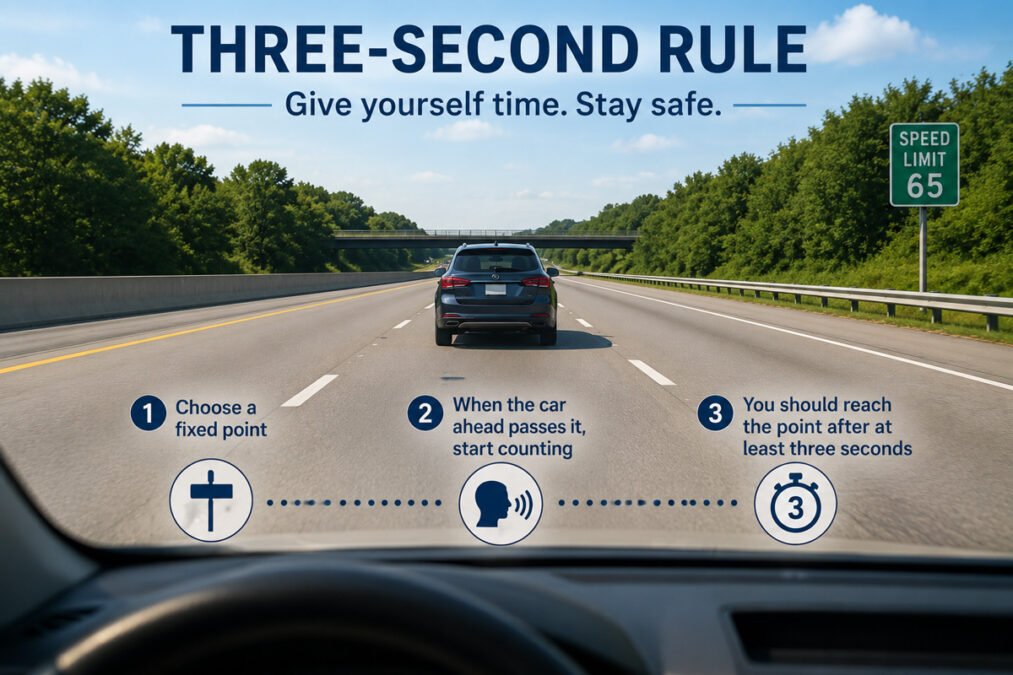
A three-second gap gives you time to notice, decide, and brake before a hazard becomes a crash.
Following too closely is one of the most common bad driving habits because it often feels normal. At 65 mph, what looks like a reasonable gap may actually be less than two seconds of reaction and braking space.
Why it happens: At speed, distance is easy to misjudge. Drivers also adjust to the traffic around them. If everyone else is following closely, tailgating can start to feel normal.
The risk: Rear-end crashes are a major crash pattern. NHTSA research has described rear-end crashes as accounting for more than 29% of all crashes, which is why following distance matters so much.
The fix: Use the three-second rule. Pick a fixed point on the road — a sign, lane marking, bridge, or shadow. When the car ahead passes it, count: one thousand one, one thousand two, one thousand three. If you reach the point before finishing the count, ease off the accelerator.
In rain, snow, fog, heavy traffic, or darkness, increase the gap to at least four or five seconds.
For more wet-weather guidance, including following distance, hydroplaning, and standing water, see how to drive safely in the rain.
Mistake 2: Not Checking Blind Spots Before Changing Lanes
Mirrors cover most of the area around your vehicle, but not all of it. The zones just behind and beside your rear doors are where another vehicle can sit out of mirror view until you begin moving into its lane.
Why it happens: Mirror checking becomes automatic. The shoulder check gets dropped because drivers feel they already looked. But mirrors and shoulder checks do different jobs.
The risk: A vehicle in your blind spot may have little or no warning before you move into its lane. That creates side-swipe and lane-change crash risk, especially at highway speeds.
The fix: Every lane change gets the same order: signal, mirror check, shoulder check, then move. The shoulder check should be quick — enough to confirm the blind spot, not long enough to take your attention away from the road ahead.
Mistake 3: Rolling Through Stop Signs
A rolling stop may feel harmless when the intersection looks empty, but it removes the pause you need to see pedestrians, cyclists, and cross traffic clearly.
Why it happens: Full stops feel unnecessary when no traffic is visible. Over time, slowing down starts to feel like stopping.
The risk: Intersections hide hazards. Parked cars, shrubs, poles, school buses, pedestrians, and cyclists can block your view until you are almost in the conflict zone.
The fix: Stop with the wheels fully still behind the stop line or crosswalk. Then check left, right, and left again before moving. The full stop adds only a moment, but it creates the scan time that a rolling stop removes.
Mistake 4: Inconsistent Speed on the Highway
Varying your speed on the highway — accelerating, coasting, braking, then accelerating again — makes traffic behind you less predictable.
Why it happens: Drivers often match the car ahead instead of monitoring their own speed. Distraction, hills, fatigue, and unnecessary braking also create speed swings.
The risk: Speed variation compresses following distances. When one driver brakes unnecessarily, the braking often ripples backward through traffic.
The fix: On long, open highway stretches, use cruise control when conditions are safe. When driving manually, choose a reasonable speed and check your speedometer regularly. If your speed is constantly rising and falling, you may be reacting to traffic instead of managing your own vehicle smoothly.
Do not use cruise control in heavy rain, snow, ice, or other low-traction conditions.
Mistake 5: Driving Distracted — Beyond Just the Phone
Phone use is the most obvious distraction, but it is not the only one. Eating, adjusting navigation, searching for music, emotional conversations, and mental preoccupation can all reduce attention.
Why it happens: Multitasking feels efficient. Most of the time, nothing happens, which reinforces the habit.
The risk: Distraction delays hazard recognition. NHTSA reports that 3,208 people were killed in 2024 crashes involving distracted drivers. Its distracted-driving campaign also reports more than 315,000 injuries in crashes involving distracted drivers in 2024.
The fix: Handle tasks before you drive. Set navigation, choose audio, put food away, and silence nonessential notifications before moving. If something genuinely needs your attention, pull over safely instead of trying to manage it while driving.
For phone use, mount the phone only for navigation, keep alerts quiet, and let calls or messages wait.
Mistake 6: Not Using Turn Signals — or Using Them Late
Signaling is not for you. It is for everyone else who needs to understand what your vehicle is about to do.
Why it happens: On familiar roads, signaling can feel unnecessary because you already know where you are going. That thinking is backward. The signal exists because other drivers, cyclists, and pedestrians do not know your plan.
The risk: Late or missing signals remove advance warning. Drivers behind you may brake suddenly, pedestrians may enter your path, and nearby vehicles may not know you are moving into their lane.
The fix: Signal before the maneuver, not during it. For lane changes, signal first, check mirrors, check the blind spot, then move. For turns, signal early enough that others have time to react.
Make signaling a reflex, not a decision.
Mistake 7: Speeding in School, Work, and Residential Zones
Drivers often carry their normal speed into places where the risk has changed. School zones, work zones, and residential streets require more attention because people may be close to the road.
Why it happens: Familiar routes create autopilot. A driver may know the road so well that they stop noticing the speed-limit change.
The risk: Speeding reduces reaction time and increases crash severity. NHTSA reports 11,288 speeding-related traffic deaths in 2024. Special zones may also carry enhanced penalties. In New York, for example, the Governor’s Traffic Safety Committee says fines are doubled in work zones and enhanced penalties apply in school zones and on restricted highways.
The fix: On familiar routes, actively note where the speed limit changes. On unfamiliar roads, watch signs instead of copying the speed of surrounding traffic. Navigation apps can help, but posted signs and conditions still control your driving.
For a broader routine covering speed creep, changing speed limits, and pressure from faster traffic, use these practical habits for avoiding speeding tickets.
Mistake 8: Poor Merging Technique
Merging is simple in theory, but it causes problems when drivers hesitate, force the move, or run out of lane without a plan.
Why it happens: Some drivers merge too early because they are afraid the lane will end. Others wait too long and panic. Both habits can disrupt traffic.
The risk: Abrupt merging forces other drivers to brake hard. Stopping at the end of an acceleration lane is especially risky because it makes it harder to join traffic safely.
The fix: Use the merge lane to match the speed of traffic. Signal early, find a realistic gap, and move into it smoothly. Do not drift in without checking. Do not stop unless traffic conditions force you to.
When two lanes are combining in slow traffic, a zipper merge — alternating one vehicle at a time near the merge point — is often the smoothest pattern when local rules and signs allow it.
Mistake 9: Overdriving Your Headlights at Night
Overdriving your headlights means driving so fast that you cannot stop within the distance your headlights illuminate.
Why it happens: Daytime speed habits carry over into night driving. Once the road feels familiar, drivers forget that visibility has changed.
The risk: A pedestrian, stopped vehicle, animal, or road debris may appear at the edge of your headlight range too late for a safe stop. California’s commercial driver handbook gives a useful safety principle: low beams show about 250 feet ahead and high beams about 350–500 feet, and drivers must adjust speed so stopping distance stays within visible distance.
The fix: Slow down when the road is dark, unlit, wet, curved, or unfamiliar. Use high beams when appropriate, but switch to low beams when required for oncoming or nearby traffic. Clean your headlights and windshield regularly because haze, dirt, and yellowed lenses reduce usable visibility.
The practical rule is simple: if you cannot stop within the space you can see, you are going too fast for conditions.
Mistake 10: Treating a Yellow Light as a Signal to Speed Up
A yellow light means the signal is about to turn red. It is not an invitation to accelerate.
Why it happens: Stopping feels like losing time. Drivers often try to avoid waiting through another light cycle, especially when they are close to the intersection.
The risk: Accelerating through a late yellow can put you in the intersection as cross traffic begins moving. It also increases the chance of entering on red if you misjudge the timing.
The fix: When a light turns yellow, ask one question: can I stop safely without sudden hard braking? If yes, stop. If stopping would require hard braking or create a rear-end risk, continue carefully at your current speed. Do not accelerate to beat the light.
The right habit is “prepare to stop,” not “go faster.”
Which Bad Driving Habit Should You Fix First?
Start with the habit that creates the most risk on your normal drives.
If you drive mostly on highways, begin with following distance, lane changes, merging, and speed control. If you drive mostly in town, begin with stop signs, yellow lights, signaling, and scanning for pedestrians. If you drive often at night, fix headlight overdriving first.
A simple one-week practice plan works well:
- Choose one habit.
- Name the replacement behavior.
- Practice it on every drive for one week.
- Add the next habit only after the first one feels automatic.
Trying to fix ten habits at once usually does not work. Replacing one habit at a time is slower, but it lasts longer.
Frequently Asked Questions
What is the most dangerous bad driving habit?
There is no single answer for every driver, but distracted driving, speeding, following too closely, and unsafe intersection behavior are among the most dangerous patterns. They are common, easy to underestimate, and directly affect reaction time.
Which common driving mistake causes the most crashes?
Rear-end crashes are one of the most common crash types, which is why following distance matters. Distracted driving and speeding are also major safety problems because they reduce the time and space a driver has to respond.
How do I break a bad driving habit?
The most effective approach is deliberate practice. Pick one habit, define the exact replacement behavior, and practice it on every drive for a week. For example, instead of saying “I will drive better,” say, “I will use a three-second following distance every time traffic is moving.”
Can a defensive driving course help with these habits?
Yes. A state-approved defensive driving course can help because it explains the reasoning behind safer habits and gives structure to common situations like following distance, scanning, lane changes, and speed control. See how defensive driving works for what these courses usually cover.
Is it worth fighting a ticket for one of these violations?
It depends on the violation, your record, the evidence, and your state’s rules. For minor violations, completing a defensive driving course may sometimes be faster and less expensive than contesting the ticket — but eligibility varies by state and court. See what to do after getting a traffic ticket for a step-by-step breakdown.
Are bad driving habits the same as reckless driving?
Not always. A bad driving habit may be careless, risky, or ticketable without legally qualifying as reckless driving. Reckless driving usually involves a more serious legal standard and varies by state. If the ticket involves reckless driving, injury, alcohol, drugs, very high speed, or a crash, consider speaking with a qualified traffic attorney before responding.
Where to Start
Most bad driving habits are not the result of bad intentions. They form gradually and become invisible because nothing bad happens most of the time.
That is exactly why they need attention.
Pick one habit from this list and practice the safer version for a week. Following distance, distraction control, and speed awareness are usually the best places to start because they affect nearly every drive.
Small corrections make driving calmer, safer, and less likely to end with a ticket, near-miss, or crash.
Sources
- National Highway Traffic Safety Administration, Distracted Driving Dangers and Statistics
- National Highway Traffic Safety Administration, Put the Phone Away or Pay — Distracted Driving Campaign
- National Highway Traffic Safety Administration, Speeding and Aggressive Driving Prevention
- National Highway Traffic Safety Administration, Traffic Safety Facts: Rear-End Crashes
- California DMV, Commercial Driver Handbook — Driving Safely
- New York Governor’s Traffic Safety Committee, Penalties for Speeding