

Car Safety Gear Checklist: What to Keep in Your Car
Car safety gear will not make you a better driver by itself. Defensive driving habits still matter more than any product you can buy.
The right gear does something different: it helps when a normal drive becomes a problem. A dash cam can document what happened after a crash. A warning triangle can make your stopped car easier to see. A tire pressure gauge can catch a slow leak before it becomes a shoulder-of-the-road emergency.
This checklist focuses on practical gear most drivers can actually use, what to prioritize first, and what to skip.
Quick Answer: The Car Safety Gear Worth Having First
If you are starting from scratch, do not buy every gadget marketed as a safety product. Start with the items that solve the most common real-world problems: crash documentation, roadside visibility, dead batteries, tire trouble, distraction control, and minor injuries.
| Gear | Priority | Why it matters | Best for |
|---|---|---|---|
| Dash cam | High | Documents crashes, hit-and-runs, and fault disputes | Daily commuters, city drivers, highway drivers |
| Roadside emergency kit | High | Keeps you visible and functional during a breakdown | Every driver |
| Tire pressure gauge | High | Catches slow leaks before the dashboard warning appears | Every driver |
| Portable jump starter | High | Lets you handle a dead battery without another vehicle | Older cars, winter driving, frequent short trips |
| Phone mount | Medium | Reduces handling of the phone while navigating | Drivers who use phone navigation |
| First aid kit | Medium | Handles small injuries and basic wound care | Families, road trips, long commutes |
| Blind spot mirrors | Optional | Adds a low-cost visibility layer | Older cars without blind spot monitoring |
| Seasonal supplies | Conditional | Helps in snow, heat, remote roads, or long trips | Climate- and trip-dependent |

What Counts as Car Safety Gear?
Car safety gear is equipment kept in or installed on your vehicle to help with emergencies, visibility, documentation, basic maintenance, and distraction control.
It is not the same as defensive driving. Defensive driving is behavior: scanning ahead, keeping space, adjusting speed, and staying off the phone. Gear is backup. It helps when something goes wrong despite your driving habits.
Good car safety gear should meet three tests:
- It solves a realistic problem. Dead battery, flat tire, crash dispute, phone distraction, or minor injury.
- It is simple enough to use under stress. If you need a long manual in the rain, it is probably not useful roadside gear.
- It stays in the car. Gear stored at home does not help when the problem happens on the road.
See how defensive driving works for the habits that reduce the chance you will need this gear in the first place.
1. Dash Cam
A dash cam is the most useful piece of car safety gear for documenting what happened before, during, and after a crash. It records video in a continuous loop from your windshield, and some models also record the rear view.
Why it matters
A careful driver can still be blamed for a crash another driver caused. A dash cam cannot prevent the crash, but it can help document lane position, traffic light color, following distance, road conditions, and whether another vehicle cut in or ran a red light.
What to look for
- Clear daytime and nighttime footage: Do not buy on resolution alone. Plate readability, low-light performance, exposure control, and lens quality matter more than a big number on the box.
- Loop recording: The camera should automatically overwrite old footage so the memory card does not fill up.
- Emergency file locking: A good unit can save impact footage so it is not overwritten.
- Heat tolerance: Important if the car sits in summer sun.
- Parking mode: Useful for parking-lot hits, but it usually requires hardwiring or a battery-safe power setup.
- Rear camera option: Worth considering if you drive in heavy traffic or frequently park on the street.
Front-only vs. front-and-rear
A front-only dash cam covers many common disputes. A front-and-rear system is better for rear-end crashes, parking-lot contact, and situations where the other vehicle approaches from behind.
What to skip
Skip models that sell themselves mainly on extreme resolution, fake night vision language, or a long list of weak features. A reliable camera with usable footage is better than a fragile camera with impressive marketing.
2. Roadside Emergency Kit
A roadside emergency kit helps when the car is stopped somewhere it should not be: a shoulder, a dark road, a parking lot, or a service lane.
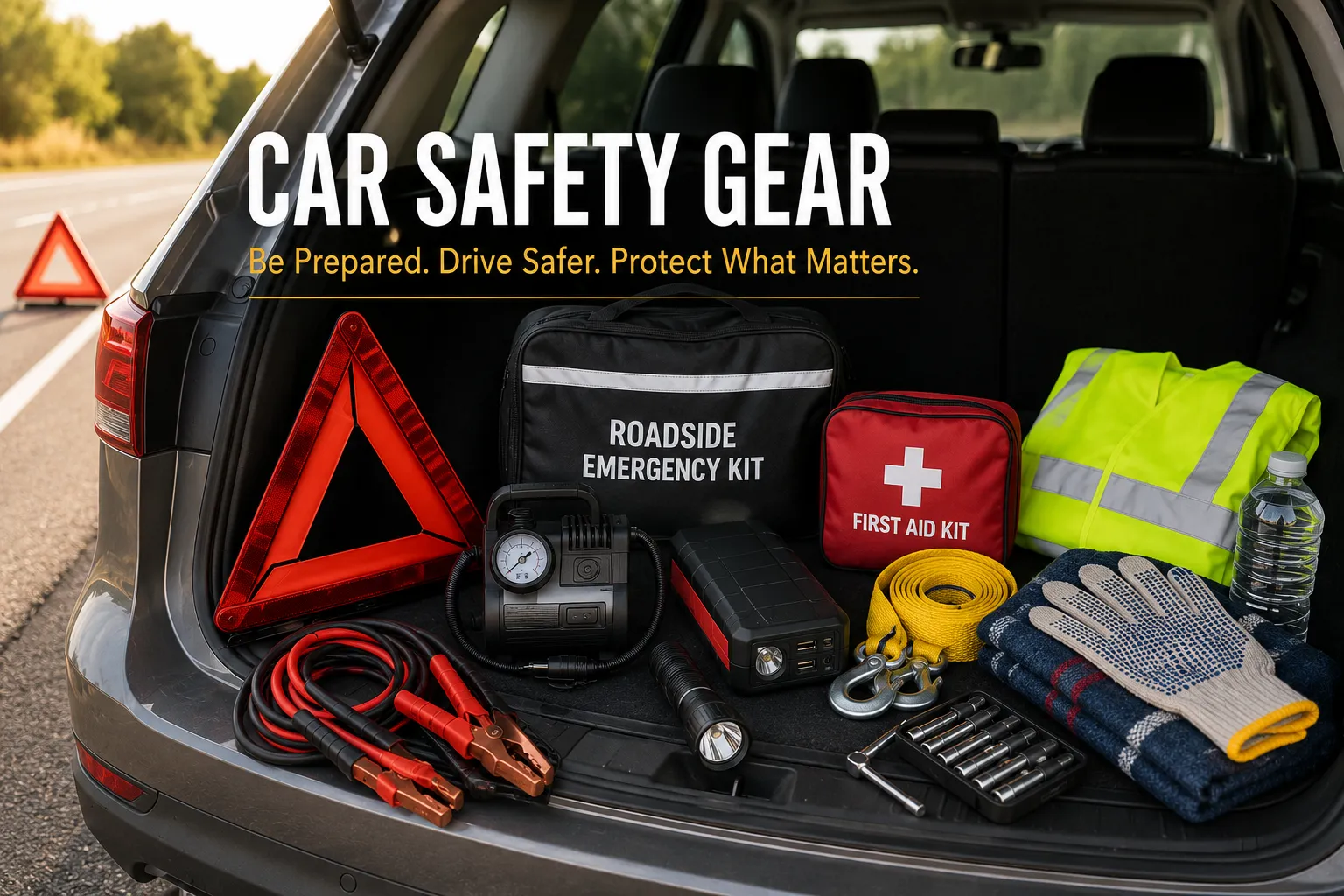
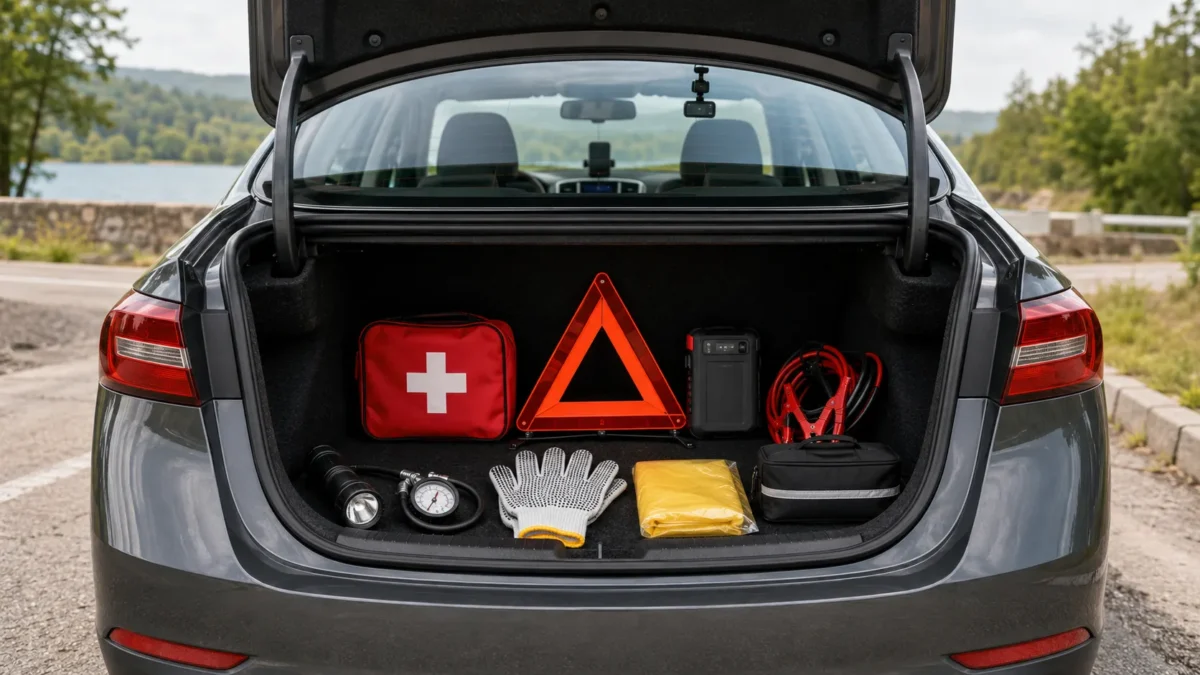
NHTSA recommends an emergency roadside kit that includes items such as a cell phone and charger, first aid kit, flashlight, flares or warning devices, jumper cables, tire pressure gauge, jack, basic repair tools, food, water, medicines, maps, and blankets.
What a useful kit includes
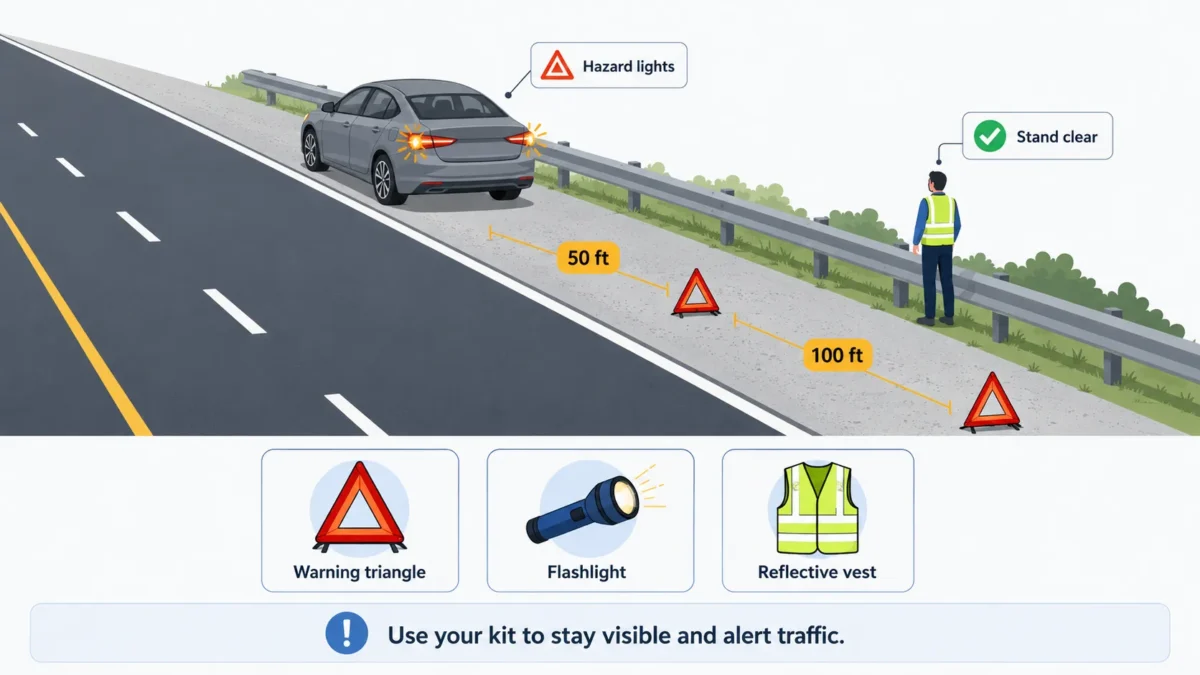
- Reflective warning triangles or LED road flares: Visibility is the first job. A disabled car is harder to see than drivers expect, especially at night or in rain.
- Flashlight with working batteries: A phone light is not enough if you need both hands free.
- Jumper cables or portable jump starter: Cables require another vehicle. A portable jump starter lets you handle many dead-battery situations alone.
- Tire pressure gauge: Small, cheap, and useful even when everything else is working.
- Inflator or sealant: Can help with minor punctures, but it is temporary and may not work on sidewall damage or major tire failure.
- Jack and lug wrench: Only useful if they fit your vehicle and you know where the lift points are.
- Work gloves and rain poncho: These are not luxury items when you are changing a tire in bad weather.
- Water, nonperishable snacks, blanket, and needed medicine: More important for winter driving, remote roads, and family trips.
What many store-bought kits miss
Many preassembled kits include thin jumper cables, weak flashlights, and lightweight triangles. A prebuilt kit is fine as a starting point, but check the actual items. Replace weak visibility gear first.
3. Tire Pressure Gauge
A tire pressure gauge is one of the cheapest safety tools in the car, and it is still worth owning even if your vehicle has TPMS.
NHTSA says a TPMS warning means at least one tire is significantly underinflated, but it also says TPMS is not a substitute for regular tire maintenance and recommends monthly inspection with an accurate gauge.
Why it matters
Underinflated tires can affect handling, braking, fuel economy, tire wear, and heat buildup. A slow leak can stay below your attention until the tire is already unsafe.
Proper tire pressure is one part of wet-weather readiness. For guidance on reducing speed, increasing following distance, handling hydroplaning, and avoiding standing water, see how to drive safely in the rain.
How to use it
Check tire pressure when the tires are cold, ideally before driving or after the car has been parked for several hours. Use the recommended pressure printed on the sticker inside the driver’s door jamb. Do not use the maximum pressure printed on the tire sidewall as your normal target.
Aftermarket TPMS sensors
Aftermarket sensors that show real-time pressure for each tire can be useful for long trips, trailers, older vehicles, or drivers who want continuous visibility. For most everyday drivers, a reliable manual gauge is enough.
4. Phone Mount
A phone mount is not exciting gear, but it can reduce one common risk: picking up the phone while driving.
NHTSA warns that texting and messaging while driving carry deadly safety risks and legal consequences, and recommends pulling over and parking before reading or sending a text.
A phone mount does not make phone use safe. It only makes navigation less distracting when the route is set before the car moves.
What a good mount does
- Keeps the screen visible for navigation without blocking the road view
- Holds the phone securely over bumps
- Allows minimal interaction without holding the phone
- Does not interfere with airbags, controls, vents, or visibility
Vent mount vs. dashboard or windshield mount
Vent mounts are simple, but they can block airflow and may expose the phone to heat in winter or cold air in summer. A stable dashboard or windshield mount is often better, as long as it does not block the driver’s view or violate local windshield-obstruction rules.
5. First Aid Kit
A basic first aid kit is useful after a minor crash, during a roadside stop, or on a family trip. It will not turn you into emergency medical help, but it can handle cuts, scrapes, and basic wound protection until proper help is available.
Minimum contents
- Adhesive bandages in several sizes
- Gauze pads and medical tape
- Antiseptic wipes
- Nitrile gloves
- Elastic wrap
- Emergency mylar blanket
- Basic pain reliever, if appropriate for your household
- Any personal medication your family may need during a delay
Check the kit once a year. Replace expired medication, dried-out wipes, missing gloves, and anything used during the year.
6. Blind Spot Mirrors
Stick-on convex mirrors can expand your view into areas that standard side mirrors may miss. They are inexpensive and useful, especially on older vehicles without blind spot monitoring.
They are not a substitute for a shoulder check. Treat them as an extra layer, not permission to change lanes without physically checking.
Where they help
- Multi-lane roads
- Parking lots
- Merging traffic
- Older vehicles with smaller mirrors
- Drivers who share a vehicle and frequently adjust mirror positions
What to skip
Be cautious with aftermarket blind spot detection systems that require wiring into the vehicle. Poor installation can create electrical problems, false alerts, or misplaced confidence. If you want electronic detection, professional installation is the safer route.
7. Seasonal and Trip-Specific Gear
The best car safety gear depends partly on where and how you drive. A Long Island commuter, a rural driver, and a winter mountain traveler do not need identical kits.
Add for winter driving
- Ice scraper and snow brush
- Small shovel
- Blanket or warm clothing
- Traction material, such as sand or cat litter
- Extra washer fluid rated for freezing temperatures
- Water and snacks for delays
NHTSA’s winter driving guidance also recommends winter-specific supplies such as a snow shovel, ice scraper, abrasive material for traction, jumper cables, flashlight, warning devices, first aid kit, blankets, phone charger, water, food, and necessary medicine.
Add for long trips
- Portable phone power bank
- Paper map or downloaded offline maps
- Extra water
- Vehicle manual
- Spare key plan
- Tire inflator
- Roadside assistance contact information
What to Prioritize If You Do Not Want to Buy Everything
First: dash cam
A dash cam gives evidence on every drive. It is especially valuable if you drive in dense traffic, park on the street, or commute through intersections where fault disputes are common.
Second: roadside emergency kit
Start with visibility, light, power, and tire basics: warning triangles or LED flares, flashlight, jump starter or jumper cables, tire pressure gauge, gloves, and basic tools.
Third: tire pressure gauge and phone mount
A tire pressure gauge prevents small problems from becoming bigger ones. A phone mount reduces the temptation to hold the phone for navigation.
Fourth: first aid and seasonal supplies
These are important, but they should be tailored to your household, climate, and travel pattern.
What Most Drivers Can Skip
Steering wheel covers
Most steering wheel covers add thickness, reduce road feel, or slip if poorly fitted. The original wheel is usually better unless the cover is high quality and securely installed.
Seat covers that interfere with airbags
Be careful with seat covers on vehicles with seat-mounted side airbags. NHTSA has warned that aftermarket equipment can affect safety systems and encourages owners to avoid disabling or reducing the effectiveness of vehicle safety features.
Radar detectors
Radar detectors may be legal in many passenger vehicles, but they encourage the wrong strategy: reacting to enforcement instead of controlling speed. The better approach is to build practical habits that help you avoid speeding tickets instead of making speeding part of the plan.
Excessive dashboard accessories
Extra dashboard objects add glare, clutter, distraction, and projectile risk during a crash. Keep what you actually use. Remove what only decorates the car.
Cheap emergency gadgets you have never tested
A weak flashlight, dead jump starter, wrong-size lug wrench, or sealant can that expired years ago creates false confidence. Test the gear before you rely on it.
Frequently Asked Questions
What is the most important car safety gear to buy first?
Start with a dash cam and a roadside emergency kit. The dash cam helps document crashes and disputes. The roadside kit helps when the car is stopped in a vulnerable place. Add a tire pressure gauge and phone mount next.
Is a dash cam worth it if I am a careful driver?
Yes. A careful driver can still be hit by someone else, blamed unfairly, or involved in a parking-lot hit-and-run. A dash cam protects you by documenting what happened, not by changing how you drive.
Do I still need a tire pressure gauge if my car has TPMS?
Yes. TPMS is a warning system, not a replacement for regular pressure checks. Use a gauge monthly and before long trips, and use the recommended tire pressure listed on the driver’s door jamb sticker.
Are roadside emergency kits required by law?
For most private passenger vehicles in the United States, roadside emergency kits are recommended but not generally required. Commercial vehicles may have separate warning-device requirements. Even when not required, visibility gear, a flashlight, jumper cables or a jump starter, and basic tire tools are still practical to carry.
Can I use my phone as a dash cam?
Technically, yes, but it is usually not the best setup. A phone dash-cam app can drain the battery, overheat the phone, interrupt navigation, and fail to record reliably after a crash. A dedicated dash cam is simpler and more dependable.
Are blind spot mirrors worth it?
They can be worth it on older vehicles or cars with limited mirror visibility. They should not replace a shoulder check. Use them as an extra scan point before changing lanes.
What should I keep in my car for winter?
At minimum, add an ice scraper, snow brush, blanket or warm layer, flashlight, phone charger, water, snacks, and traction material if you drive in snow or ice. A small shovel and portable jump starter are also useful in colder climates.
How often should I check my car safety gear?
Check it twice a year. Confirm flashlight batteries, jump starter charge, tire sealant expiration, first aid supplies, water, medication, and whether the jack and lug wrench still fit the vehicle.
Bottom Line
The best car safety gear is simple, practical, and already in the vehicle when something goes wrong.
Start with the essentials: dash cam, roadside emergency kit, tire pressure gauge, jump starter or jumper cables, phone mount, and first aid kit. Skip the gadgets that create false confidence or distraction.
Gear is not a substitute for defensive driving. It is backup for the moments when attention, space, and good habits are not enough.