
Night Driving Tips: How to Drive Safely After Dark

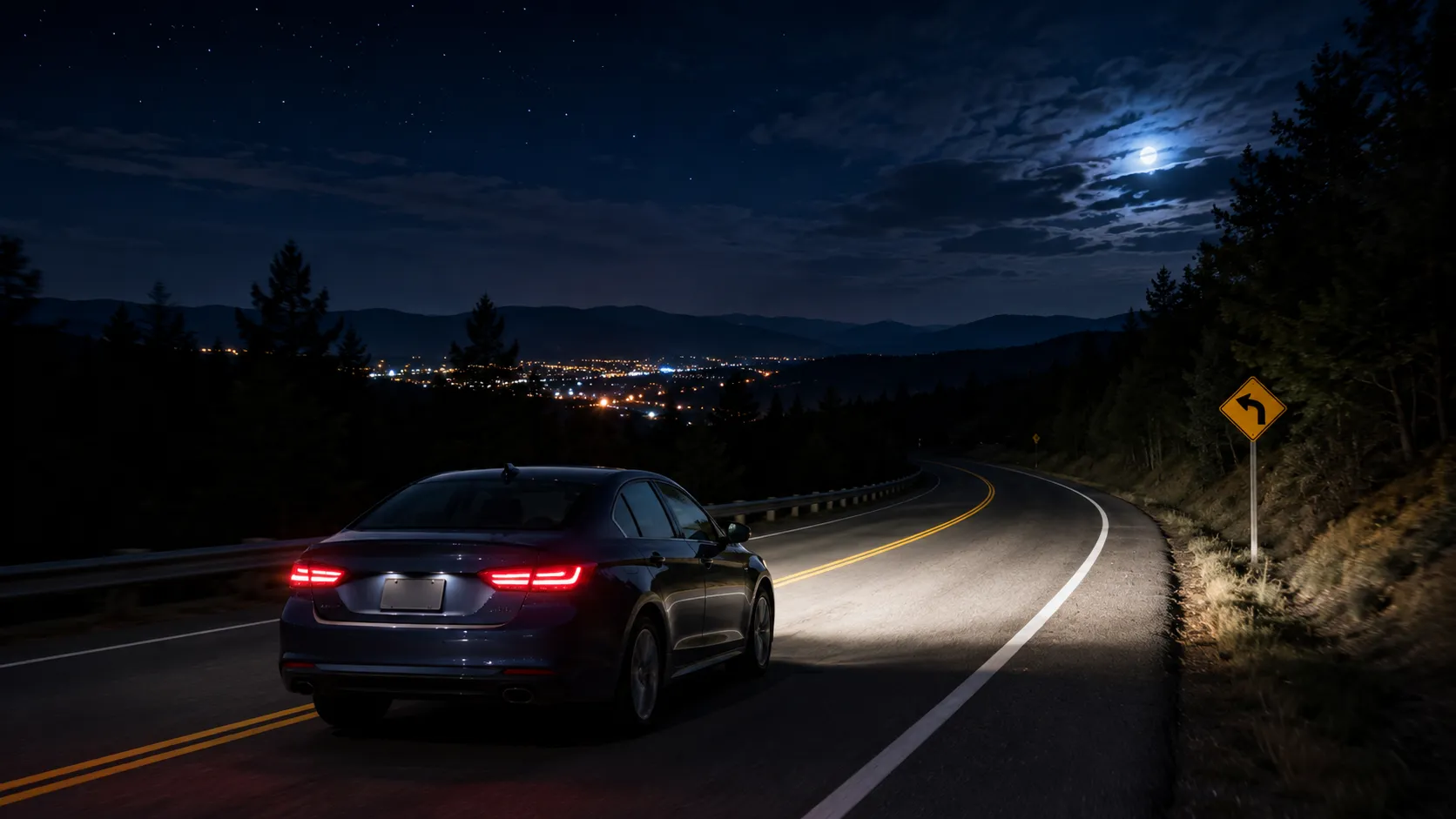
Night driving is not just daytime driving with less light. Visibility and contrast drop, glare can interfere with seeing, and judging distance may become more difficult. Fatigue also becomes a greater concern on late-night trips. Pedestrians and cyclists may not become visible until later.
The best night driving tips are simple but important: slow down, increase following distance, keep your windshield and headlights clean, use high beams correctly, and stop if you feel drowsy. These adjustments give you more time to see hazards before they become emergencies.
Quick Answer: How Do You Drive Safely at Night?
To drive safely at night, reduce your speed enough that you can stop within the area your headlights reveal. Use low beams around traffic, high beams on dark roads when legal and safe, avoid staring into oncoming headlights, increase your following distance, and do not keep driving if you are drowsy.
| Night driving risk | Safer adjustment |
|---|---|
| Limited headlight range | Slow down before you overdrive your headlights |
| Headlight glare | Look toward the right edge line, not directly at the lights |
| Reduced reaction time | Increase following distance and add more space in poor conditions |
| Pedestrians and cyclists are harder to see | Scan road edges and intersections earlier |
| Fatigue after dark | Stop, rest, or switch drivers instead of pushing through |
| Fog, rain, or snow | Use low beams when high beams worsen visibility |
Why Night Driving Is Higher Risk
Your headlights do not show the whole road ahead
Headlights create a limited visibility zone. A 2015 AAA test of selected halogen, HID, and LED headlight systems found that available illumination could be insufficient for stopping at some moderate or highway speeds. The results illustrate the limits of headlights but do not establish one visibility distance for every current vehicle. High beams improve visibility, but they still have limits — and they cannot be used when they would blind other drivers.
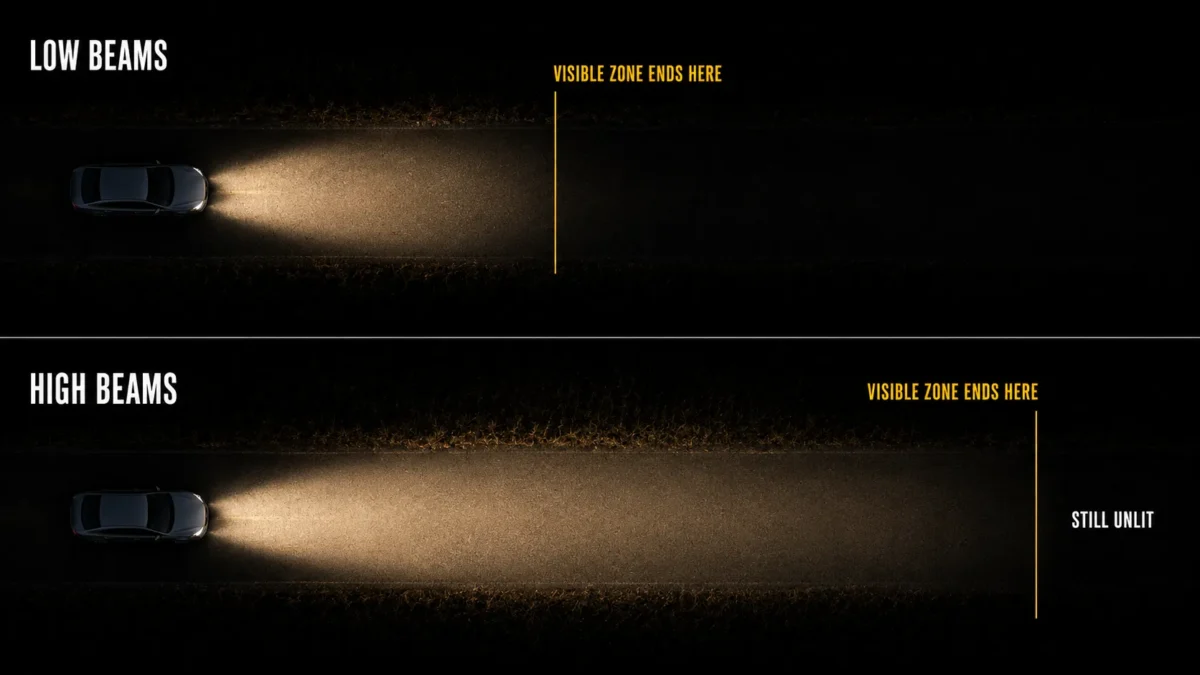
The practical takeaway: do not treat the speed limit as automatically safe at night. On dark, rural, wet, or curving roads, reduce speed enough that you can stop within the visible area ahead.
Pedestrians are much harder to see after dark
Night driving requires extra attention near crosswalks, intersections, bus stops, parking lots, neighborhoods, and road shoulders. According to NHTSA’s 2023 pedestrian data, far more pedestrian fatalities occurred in the dark than in daylight.
That does not mean every dark road is equally dangerous. It means drivers need to scan earlier and assume that a person in dark clothing may not become visible until late.
Fatigue Is a Serious Night-Driving Risk
NHTSA says drowsy-driving crashes occur most frequently between midnight and 6 a.m. or in the late afternoon, when circadian alertness commonly dips. Drowsiness can affect a driver at other times as well. If warning signs appear, leave the travel lane and stop at a safe location rather than trying to push through.
The safest response is not to “try harder” when you are tired. If you are drowsy, stop in a safe, legal place and rest.
9 Night Driving Tips That Make a Real Difference
1. Slow Down Before You Overdrive Your Headlights
“Overdriving your headlights” means driving so fast that your stopping distance is longer than the distance you can clearly see. At night, this can happen even when you are technically under the speed limit.
A better rule is this: drive at a speed that lets you stop for a pedestrian, animal, stalled vehicle, or debris inside the area your headlights illuminate.
Slow down more when:
- The road has no street lighting
- The road is wet, foggy, snowy, or icy
- The road curves, rises, or dips
- You are near woods, parks, neighborhoods, or school zones
- Oncoming headlights are reducing your visibility
Avoid giving a fixed “safe night speed” for every road. The right speed depends on visibility, road surface, traffic, curves, and your headlight performance.
2. Use Low Beams and High Beams Correctly
Your headlights are both a visibility tool and a communication tool. Using the wrong beam at the wrong time can make the road less safe for you and other drivers.
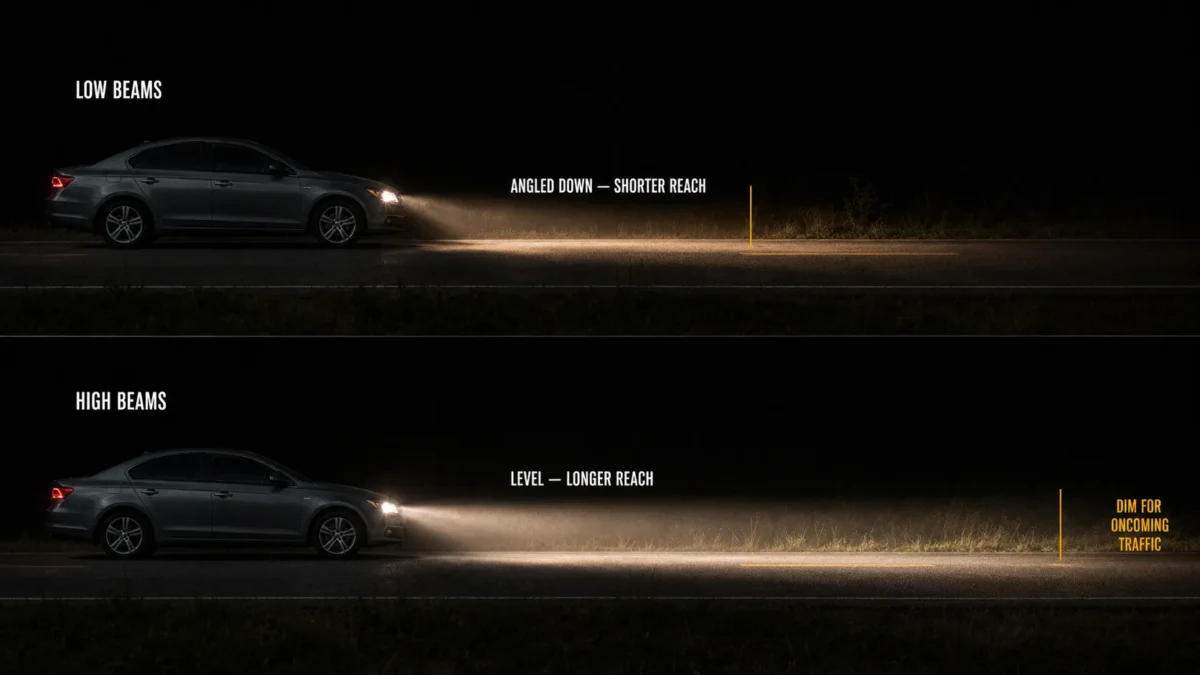
Use these basic rules:
- Use headlights at dusk, dawn, and in low visibility. Do not wait until the road is fully dark.
- Use high beams on dark, open roads when there are no nearby vehicles ahead or coming toward you.
- Dim high beams early around oncoming vehicles and vehicles ahead. State law—not a national rule—sets the required distances and other restrictions.
- Use low beams when high beams worsen visibility. The National Weather Service specifically advises never using high beams in fog; rain and snow may also increase reflected glare.
- Do not rely only on daytime running lights. They may not activate your taillights.
A simple check: if your high beams would shine into another driver’s eyes or mirrors, switch to low beams.
3. Keep Headlights Clean, Clear, and Properly Aimed
Headlight condition matters more than many drivers realize. Cloudy lenses, dirty covers, weak bulbs, and poor aim can reduce useful visibility.
Before routine night driving, check:
- Are both headlights working?
- Are the lenses cloudy, yellowed, or dirty?
- Are the beams aimed too low, too high, or unevenly?
- Do the lights seem weaker than they used to?
Restoring cloudy lenses can help, but it is not a substitute for proper aim or good bulbs. IIHS research links better headlight visibility ratings with fewer nighttime single-vehicle and nighttime pedestrian crashes, which supports treating headlights as a safety item, not just a cosmetic issue.
4. Clean the Inside and Outside of the Windshield
A windshield that looks acceptable during the day can become a glare problem at night. Film on the inside glass scatters oncoming headlights and streetlights, which can create halos and reduce contrast.
Clean these surfaces regularly:
- Outside windshield
- Inside windshield
- Rear window
- Side windows
- Side mirrors
- Rearview mirror
- Camera/sensor areas, if your vehicle has driver-assistance features
Use a proper glass cleaner and clean microfiber cloth. If streaks remain, change the cloth instead of wiping harder.
5. Manage Headlight Glare Without Staring Into It
Oncoming headlights can temporarily reduce your ability to see the road ahead. The worst response is to stare directly at the bright lights.

When glare is strong:
- Shift your eyes slightly toward the right edge line or road shoulder
- Keep the lane position steady
- Reduce speed if visibility drops
- Avoid flashing high beams repeatedly or retaliating with your own high beams
- Use the night setting on your rearview mirror when headlights behind you are bright
A brief high-beam flash may alert another driver that their high beams are on, but do not turn glare into a contest. Both drivers lose visibility.
6. Increase Your Following Distance
At night, you often depend on taillights and brake lights to understand what is happening ahead. That is less information than you get in daylight.
Use a longer following gap at night than you use in clear daylight. A four-second count can be a conservative technique, but it is not a nationwide legal standard. Follow your state driver handbook and add more time when visibility is poor, roads are wet, traffic is fast, or another vehicle blocks your view.
How to check the gap:
- Pick a fixed object ahead, such as a sign or lane marker.
- When the vehicle ahead passes it, start counting.
- Do not reach the same point until the following interval you selected has elapsed.
If you reach it sooner, ease off the accelerator and rebuild the gap.
7. Watch Road Edges for Pedestrians, Cyclists, and Animals
At night, hazards often appear from the edges of your headlight pattern, not the center of the lane. That includes pedestrians crossing mid-block, cyclists without strong lights, deer near wooded areas, and stopped vehicles on the shoulder.
Pay extra attention near:
- Crosswalks and intersections
- Transit stops
- Parking lots and shopping centers
- Schools, parks, and neighborhoods
- Wooded roads and deer crossing areas
- Curves and hill crests
If one deer crosses, slow down and watch for more. Deer often travel in groups, and sudden swerving can be more dangerous than controlled braking.
8. Handle Fog, Rain, and Snow Differently at Night
Bad weather is harder to read after dark because reflective road surfaces, glare, and reduced contrast work against you.
In fog, the National Weather Service says to use low beams and not high beams because high beams create glare. Rain and snow can also reflect light and reduce contrast, but the best beam setting depends on conditions, vehicle equipment, and applicable law. Use low beams whenever high beams make visibility worse.
In poor weather at night:
- Slow down early
- Use low beams or fog lights if available and legal
- Increase following distance
- Avoid sudden braking or sharp steering
- Follow lane markings with your eyes when visibility is reduced
- Pull over only in a safe location, not on a travel lane or narrow shoulder
For more detailed guidance on speed, following distance, hydroplaning, and standing water, see how to drive safely in the rain.
Hazard-light rules and recommended use vary by state and situation. Follow state law. If visibility becomes unsafe, leave the travel lane and stop at a safe location rather than continuing solely because the hazard lights are on.
9. Stop When You Are Drowsy
Drowsiness is not a mindset problem. It is a physical impairment that slows reaction time, weakens judgment, and can cause microsleeps you may not notice.
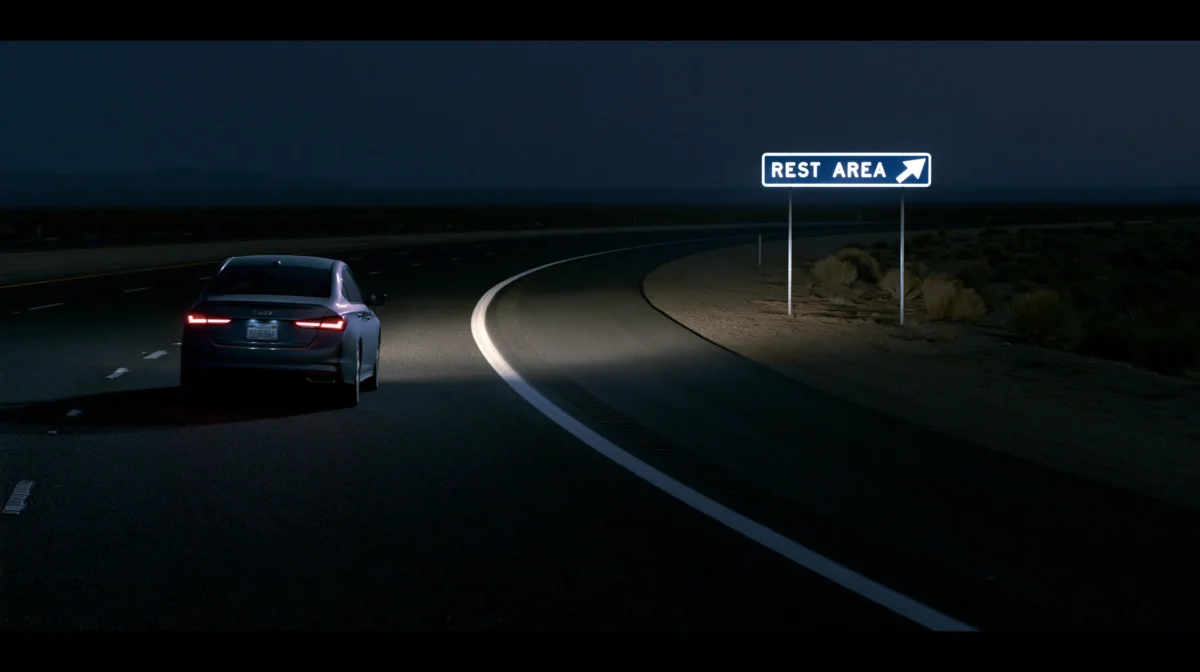
Warning signs include:
- Frequent yawning
- Heavy eyelids
- Drifting from your lane
- Missing exits or signs
- Trouble remembering the last few miles
- Hitting rumble strips
- Changing speed unintentionally
NHTSA warns that coffee or energy drinks alone may not provide enough alertness and do not replace sleep. For a driver who becomes sleepy, NHTSA describes one to two cups of coffee followed by a short, approximately 20-minute nap at a safe designated stop as a temporary measure—not permission to continue while severely sleep-deprived.
Before You Drive at Night: Quick Checklist
Use this checklist before a long night drive or any unfamiliar after-dark route.
| Check | Why it matters |
|---|---|
| Headlights and taillights work | Other drivers need to see you too |
| Windshield is clean inside and out | Reduces glare and halos |
| Mirrors are clean and adjusted | Helps monitor traffic without extra head movement |
| Route is planned | Reduces last-minute lane changes and missed turns |
| Phone is set before departure | Prevents distraction in low visibility |
| You are rested | Fatigue risk rises late at night |
| Weather is checked | Rain, fog, and snow change safe speed dramatically |
Night Driving vs. Day Driving Adjustments
| Daytime habit | Night adjustment |
|---|---|
| Usual clear-weather following gap | Add time for darkness, weather, speed, and limited visibility |
| Speed limit as a guide | Reduce speed when visibility is limited |
| Normal windshield cleaning | Clean the inside glass to reduce glare |
| Low beams by default | Use high beams only when safe and legal |
| Scan mostly ahead | Scan road edges, shoulders, and intersections |
| Push through mild tiredness | Stop if drowsy; fatigue is impairment |
Frequently Asked Questions
What is the safest way to drive at night?
The safest way to drive at night is to slow down enough to stop within your visible headlight range, increase following distance, avoid staring into glare, use high beams correctly, and stop if you are drowsy. These habits give you more time to see and react.
Is it legal to drive with high beams on?
High-beam rules depend on state law. Use them only where permitted and dim them as required around oncoming vehicles and vehicles ahead. The required distances and other restrictions are state-specific, so check your state driver handbook.
Should I use high beams in fog?
In fog, the National Weather Service says to use low beams and never high beams because high beams create glare. Rain and snow can also reflect light and reduce contrast. Use low beams whenever high beams make visibility worse, and follow applicable law and your vehicle guidance.
Why does night driving feel more tiring than daytime driving?
Night driving feels more tiring because your eyes and brain work harder with less visual information. Oncoming headlights, dark stretches, changing light levels, and reduced contrast all increase mental workload. Fatigue also naturally becomes more likely late at night.
Do yellow-tinted night driving glasses help?
No. In a driving simulator study, 22 people wearing yellow-lens glasses spotted pedestrians no faster than people without them. The glasses also did nothing to reduce the effects of glare. It was one small study, but nothing in it supports using yellow lenses at night. Clean glass, proper headlight aim, and slower speeds are more dependable.
How far do headlights actually illuminate?
It varies a lot—and the useful range is often shorter than you expect. Your vehicle, bulbs, lens condition, aim, road shape, and weather all matter. In a 2015 test of selected halogen, HID, and LED systems, AAA found that some headlights did not provide enough light for drivers to stop safely at moderate or highway speeds, especially on low beams. Treat your headlight range as a limit, not a guarantee. The test does not set one distance for every current vehicle.
When are drowsy-driving crashes most common?
NHTSA says drowsy-driving crashes occur most often between midnight and 6 a.m. or in the late afternoon. If possible, avoid long drives during those periods, especially when driving alone.
Are LED headlights better for night driving?
Not automatically. LED headlights can perform well, but the design, aim, and beam pattern matter more than the technology alone. IIHS notes that good headlight visibility ratings are associated with lower nighttime crash rates, but poor-rated headlights exist across different technologies.
The One Rule That Matters Most
Night driving is manageable when you respect its limits. You cannot react to what you cannot see, and you cannot safely push through real fatigue by willpower alone.
The most important rule is simple: create more time. Slow down, leave more space, keep your lights and glass clean, use high beams carefully, and stop when you are tired.
For habits that make every drive safer — day or night — see defensive driving tips and how defensive driving works. If you want to improve bad habits that make night driving riskier, see bad driving habits.
Sources
Sources reviewed August 19, 2026.