

Texas Defensive Driving for Multiple Tickets: The Same-Transaction Rule
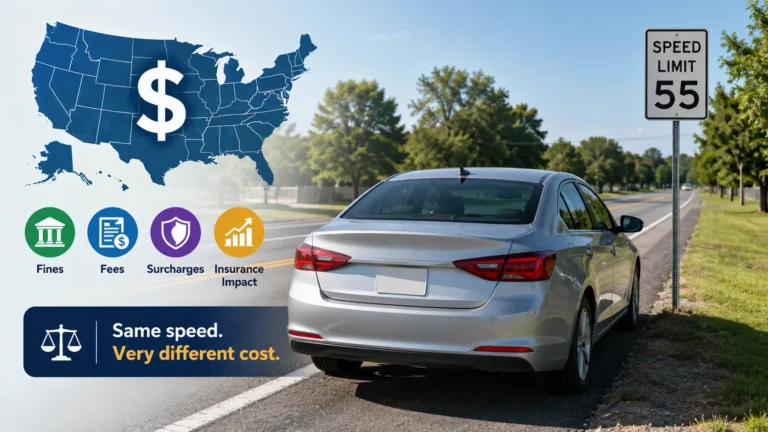
Texas defensive driving for multiple tickets changed on September 1, 2025. One approved course may now support dismissal of more than one eligible charge when the charges arose from the same criminal transaction. Before that change, Texas law generally limited each course completion to one dismissed charge.
The new rule can help a driver who received several citations during one incident, but it is not a blanket “dismiss every ticket” rule. Each charge must qualify on its own. The court must treat the charges as one transaction, and the driver must meet the other dismissal rules.
Quick answer: If one Texas traffic stop produced several charges, ask the court to review all of them under Code of Criminal Procedure Article 45A.352(b). One course may cover the eligible charges, but the court must approve the request, every charge needs its own eligibility check, and a separate reimbursement fee of up to $10 may be assessed for each eligible charge.
Rules verified: September 2, 2026, against current Texas Code of Criminal Procedure Chapter 45A, Senate Bill 296, the Legislature’s enrolled bill analysis, TDLR guidance, and the Texas Office of Court Administration fee chart.

General information only: This article explains the statewide framework and is not legal advice. The justice or municipal court handling the citations decides whether charges arose from the same criminal transaction, whether each charge qualifies, and what documents and payments it requires.
What Texas Senate Bill 296 changed
Senate Bill 296 replaced the former one-charge-per-course rule. Current Article 45A.352(b) says one completed course may cover several charges from the same criminal transaction when each charge qualifies.
Three limits are built into that sentence:
- The charges must arise from the same criminal transaction.
- Each charge on its own must qualify for the course-dismissal procedure.
- The driver must meet the remaining requirements of Subchapter H.
The enrolled bill analysis explains the practical problem with the former rule: a driver could receive several citations in one traffic stop, such as speeding and a seat-belt violation, but use a course for only one. The analysis describes the new approach as allowing one course to address the eligible citations from that stop.
That history is useful, but it does not let a driver label charges as one transaction without the court. The statute does not provide a traffic-specific checklist or a fixed time-and-distance formula for “same criminal transaction.” Ask the court to make that determination from the actual citations and incident.
Does the rule apply to an older ticket?
Possibly. The application provision in SB 296 turns on the date of the course request, not only the date of the offense.
Section 4 of the enrolled bill says the changes to Articles 45A.352(b) and 45A.358 apply to a course request made on or after September 1, 2025, even when the offenses occurred “before, on, or after” that date. Those are the two articles the bill’s older-offense clause names.
SB 296 also amended Article 45A.356(c), which now tells the court to dismiss each eligible charge after successful completion. Section 4 does not name that article in its older-offense clause. If your older case is still open, ask the court to confirm both whether it will accept the same-transaction request and how it will enter the final dismissals.
That does not revive a closed case or excuse a missed answer date. A still-available request made on or after the effective date can be considered under the new provisions. If an older case is pending, ask the clerk before taking another step.
What may count as the same criminal transaction?
For this law, the safest reader-facing example is the one supplied by the Legislature: several citations from the same traffic stop or incident.
Consider these as questions for the court, not guaranteed outcomes:
| Situation | What the rule suggests | What still needs a court decision |
|---|---|---|
| One stop produces speeding and another traffic citation | This matches the same-stop problem described in the bill analysis | Whether both charges are covered and independently eligible |
| One collision produces several citations | The charges may share one incident | Whether the court treats them as one criminal transaction and whether any crash-related exclusion applies |
| Two stops on different days | They are separate incidents, not the scenario SB 296 was designed to fix | Whether any unusual facts change the court’s treatment |
| Two stops during one trip | Being on the same trip does not by itself establish one transaction | Whether there was a meaningful break and how the charges were filed |
| Charges filed under different cause numbers | Separate numbers do not answer the statutory question by themselves | Whether the court will group them and how each request must be filed |
| Charges pending in different courts | One court cannot be assumed to control another court’s case | Whether either court sees a qualifying same transaction and how coordination works |
Ask for a written answer: Request confirmation identifying every charge the court approved for the one-course procedure. “Defensive driving approved” is too vague when several cause numbers or counts are open.
Every ticket needs a separate eligibility check
One course may serve all qualifying charges from the transaction. One eligible charge does not make the others eligible.
Create a charge-by-charge worksheet before submitting the request:
| Charge or cause number | Same transaction? | Covered offense? | Exclusion or speed problem? | Court approved? | Final dismissal confirmed? |
|---|---|---|---|---|---|
| Charge 1 | Ask court | Check | Check | Pending | Pending |
| Charge 2 | Ask court | Check | Check | Pending | Pending |
| Charge 3 | Ask court | Check | Check | Pending | Pending |
For each row, verify the following.
The offense must fall within Subchapter H
Article 45A.351 generally covers specified motor-vehicle offenses within a justice or municipal court’s jurisdiction. It also contains a broader rule for a defendant younger than 25 when the alleged offense is a moving violation involving operation of a motor vehicle and is within that court’s jurisdiction.
The court should review the code section for each charge. A familiar traffic label is not enough to establish statutory eligibility.
The driver must meet the personal requirements
The amendment did not remove the ordinary driver conditions. Article 45A.352 generally requires the driver to:
- have a Texas driver’s license or permit, or fit the active-duty military-family exception;
- satisfy the 12-month course-history rule measured back from the offense date;
- make the ordinary request and required plea on or before the answer date;
- provide evidence of financial responsibility.
Article 45A.351 excludes an offense committed by someone who holds a commercial driver’s license or held one when the offense occurred. Driving a personal vehicle does not erase that status.
Speeding still has two hard cutoffs
A speeding charge is not eligible under Article 45A.352(a)(5) if the alleged speed was:
- 95 mph or more, or
- 25 mph or more over the posted speed limit.
Passing one test does not cure failure of the other. For example, 96 mph in an 80 mph zone is less than 25 mph over, but it still reaches the 95 mph cutoff. Likewise, 70 mph in a 45 mph zone reaches the 25-over cutoff even though it is below 95 mph.
If that speeding count is ineligible, SB 296 does not make it eligible merely because another charge from the stop qualifies. Ask the court what happens to each charge separately.
Statutory exclusions still apply
Article 45A.353 excludes specified charges, including passing a school bus under Transportation Code Section 545.066, certain duties after a collision under Sections 550.022 and 550.023, a “serious traffic violation,” and an offense to which the work-zone rule in Section 542.404 applies.
The work-zone exclusion has a specific condition: workers must have been present, and the written notice to appear must state on its face that they were present. Check the face of each citation and raise the issue with the court.
Do not convert this list into a guess about a shorthand offense name. The cited code section and the court’s classification control.
How to request one course for several charges
Treat the request as a list of charges, not as a general request attached to one ticket.

1. Inventory all your citations and cause numbers
Put your citations from the incident side by side. Record each charge, code section, alleged speed and limit, date, time, location, court, cause number, and answer date.
If your citations name different courts, contact each one. Do not assume one filing protects your deadline in another case.
2. Contact the court before the earliest answer date
Article 45A.352(a)(4) generally requires your plea and request on or before the answer date. You may make a timely request in person or through counsel, by certified mail with return receipt requested, or through a court-authorized email address or portal.
Ask for the court’s current multiple-charge instructions. Buying a course does not notify the court or protect your answer date.
3. Name every charge in the request
Tell the clerk that you are asking for review under Article 45A.352(b). Identify each citation and cause number, and ask:
- Does the court find that these charges arose from the same criminal transaction?
- Is each charge eligible on its own?
- Will one completion certificate be applied to all approved charges?
- Does each cause number require a separate plea, affidavit, request, or payment?
- What total court amount is due, and what does each line cover?
- Which documents must be filed after the course?
Keep your response, receipt, and order. If the portal accepts only one cause number at a time, do not assume it included your other charges.
4. Enroll only after approval
Once the court approves your request, select a current TDLR-approved driving safety course. The provider supplies your course and certificate; it does not group your charges.
Open TDLR’s driving-safety provider search and match the provider’s exact name and license number before you pay. Select the correct attendance purpose and enter your citation details exactly as instructed.
Article 45A.356(a)(3) requires an affidavit stating that you were not already taking a course when you made the request. Enrolling before the court approves your request can make that affidavit impossible to sign.
5. File the full completion packet for every approved charge
Article 45A.356 gives you 90 days to finish the course and file the required proof. That includes your completion certificate, your DPS record unless the judge retrieves it, and the required affidavit. The court may also require its own forms.
Ask whether one packet covers all your approved charges or you must file a copy in each case. Save proof for every cause number.
6. Confirm dismissal charge by charge
SB 296 amended Article 45A.356(c) so the court removes the judgment and dismisses each eligible charge after you meet the rules. It does not make an unlisted or ineligible charge disappear.
After the court processes your packet, check every cause number. If its portal shows one dismissal and another open case, contact the clerk instead of assuming the second entry will update.
One course does not mean one fee
The course tuition is one part of the cost. Court costs, reimbursement fees, and a driving-record charge are separate.
Article 45A.358(a-1) lets the court assess a separate administrative reimbursement fee under Article 45A.358(a)(1) for each eligible offense in a same-transaction request. That reimbursement fee is no more than $10 per eligible charge.
The Texas Office of Court Administration’s justice-court cost chart, revised October 10, 2025, also notes that the fee applies to each offense or citation from the same criminal transaction. Other court costs may apply.
Ask the clerk for an itemized amount showing:
- court costs for each cause;
- the driving-safety reimbursement fee for each eligible charge;
- any driving-record retrieval fee;
- the course price paid to the provider; and
- any separate delivery or optional provider charge.
Article 45A.352(c) lets a court grant a request that misses the answer date or falls inside the 12-month window, before final disposition. For that discretionary route, Article 45A.358(a)(2) allows a fine up to the maximum for the offense. Get the amount and terms before deciding.
Mistakes that leave one ticket unresolved
The new law reduces course duplication, not paperwork risk. Watch for these mistakes:
- You request the course for only your first cause number.
- You assume all citations from one officer automatically form one transaction.
- You overlook an excluded charge or a speeding cutoff.
- You pay one portal entry and miss a second answer date.
- You enroll before the court approves your multiple-charge request.
- You file the certificate in one case but not the others.
- You assume provider reporting replaces your court filing.
- You check that “the ticket” was dismissed without reviewing each cause number.
Use the same list when you request the course, file your proof, and confirm each dismissal.
Texas multiple-ticket examples
These examples illustrate the screening process. They do not predict how a court will decide real charges.
Example 1: Two potentially eligible charges from one stop
A driver receives speeding and another minor traffic citation during one stop. The speeding allegation is below both statutory cutoffs. The driver appears to meet the license, CDL, course-history, timing, and insurance requirements.
This is the kind of same-stop situation SB 296 was designed to address. The driver should name both charges in the request and obtain written confirmation that the court approved one course for both. Each charge still needs its own eligibility finding and may carry its own reimbursement fee.
Example 2: One eligible charge and one excluded charge
A single incident produces an ordinary traffic citation plus a charge excluded by Article 45A.353. The fact that the charges share an incident does not cure the exclusion.
The court may approve the eligible charge for course dismissal while the other charge follows a different path. The driver should not describe the entire stop as “dismissed” until each cause number has a final result.
Example 3: Two unrelated stops
A driver receives one citation this month and another during a separate stop several weeks later. One course does not combine the events merely because both cases are pending at the same time.
SB 296 does not replace the 12-month course-history rule with a right to bundle unrelated tickets.
Texas Defensive Driving for Multiple Tickets FAQs
Can one defensive driving course dismiss two Texas tickets?
It may support dismissal of two or more independently eligible charges arising from the same criminal transaction. The court must approve the request and determine that each charge qualifies.
Do the tickets have to come from the same traffic stop?
The statute says “same criminal transaction.” The Legislature’s analysis repeatedly describes multiple citations from the same traffic stop or incident. Because the statute supplies no automatic traffic-specific test, ask the court to decide from the facts.
Does the law apply if the traffic stop happened before September 1, 2025?
It can. SB 296 says the multiple-charge and fee amendments apply to course requests made on or after September 1, 2025, regardless of when the offenses occurred. The case must still be open to the procedure, and all other requirements remain.
Will I pay only one court fee?
Not necessarily. The court may assess a separate driving-safety reimbursement fee of up to $10 for each eligible offense, in addition to other authorized costs and fees. Course tuition and a driving-record charge are separate.
What if only one of my charges is eligible?
The new rule does not turn an excluded or otherwise ineligible charge into an eligible one. Ask the court to identify the approved charge and the separate options and deadlines for the remaining charge.
Does one certificate automatically close every cause number?
No. File the certificate and all other required proof exactly as the court directs, then confirm the result for every cause number. Provider reporting is not a substitute for checking the court record.
Make the request about every charge
Texas’s same-transaction rule can make one approved course do more useful work, but only when the court connects the right charges and each charge passes its own test.
Start with the citations, not the course checkout. List every cause number, protect the earliest answer date, ask for review under Article 45A.352(b), and get the court’s approval in writing. After the course, file the required packet as directed and verify each dismissal separately.
Related Reading
- Traffic School vs. Court: Which Route Fits Your Ticket?
- Pay a Ticket or Request Traffic School?
- Traffic School Rules by State
Sources
- Texas Legislature — Senate Bill 296 enrolled text
- Texas Legislature — Senate Bill 296 enrolled bill analysis
- Texas Code of Criminal Procedure Chapter 45A — Subchapter H
- TDLR — SB 296: Driving Safety or Motorcycle Operator Training Course Dismissal
- Texas Office of Court Administration — Justice Court Convictions: Court Costs and Reimbursement Fees (revised October 10, 2025)
- TDLR — Driving Safety Provider Search
Last updated: September 2, 2026